


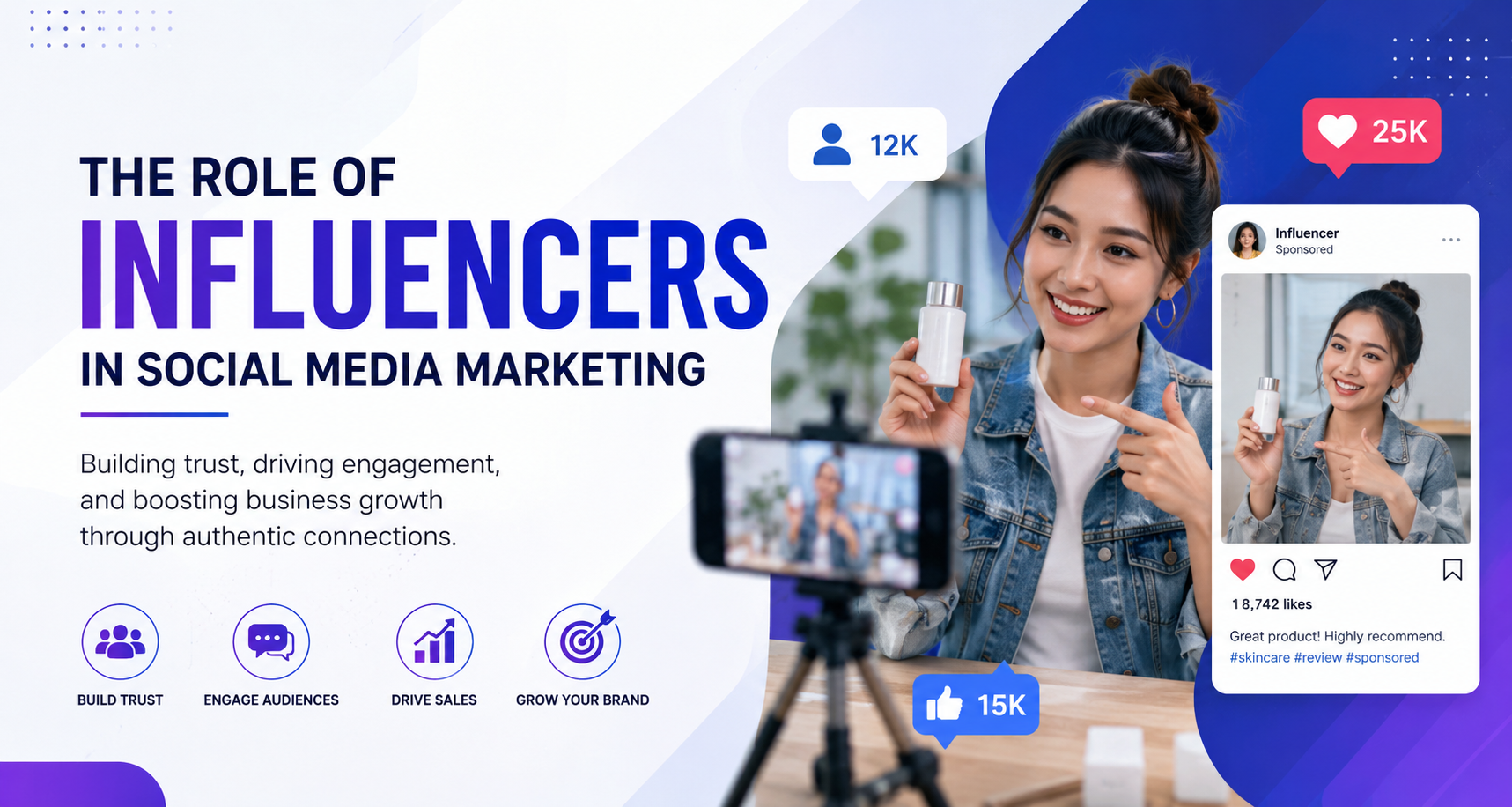
Social media has completely transformed the way businesses communicate with customers. A few years ago, brands mainly relied on television ads, newspaper promotions, and direct marketing campaigns to reach audiences. Today, customer attention has shifted to digital platforms where people spend hours consuming content, following creators, and engaging with online communities.
This change has made influencer marketing one of the most powerful strategies in modern digital marketing.
Consumers no longer want to feel like they are being “sold to.” Instead, they prefer recommendations from people they trust. This is exactly where influencers have changed the marketing landscape. Whether it’s a fitness coach reviewing supplements, a technology creator explaining a new software tool, or a business expert sharing insights on LinkedIn, influencers now shape buying decisions across almost every industry.
For startups, SMEs, enterprises, and companies planning digital transformation, influencer marketing is no longer optional. It has become an essential part of building visibility, trust, and long-term customer relationships in an increasingly competitive online market.
In this article, we will explore how influencers impact social media marketing, why businesses are investing heavily in creator partnerships, the benefits and challenges of influencer campaigns, and how companies can use influencer marketing strategically for long-term growth.
Understanding Influencer Marketing
Influencer marketing is a digital marketing strategy where businesses collaborate with individuals who have strong online audiences and influence over their followers. These creators promote products, services, or brands through engaging social media content.
Unlike traditional advertising, influencer marketing feels more personal and conversational. Influencers build loyal communities over time, and their audiences often trust their opinions more than direct brand advertisements.
This trust factor is one of the biggest reasons influencer marketing has become so successful.
When a customer sees a traditional advertisement, they may question whether the message is purely promotional. However, when they see a creator they regularly follow discussing a product naturally, it creates a sense of authenticity. The recommendation feels more relatable and genuine.
This shift in consumer behavior has changed how businesses approach digital marketing.
Why Influencers Have Become So Important
Modern consumers are surrounded by advertisements every day. From banner ads and sponsored videos to email promotions and social campaigns, people are constantly exposed to marketing messages.
Because of this overload, audiences have become more selective about what they trust.
Influencers help brands overcome this challenge by making marketing feel human. Instead of presenting a scripted advertisement, creators integrate products into their daily lives, experiences, and stories. This makes the content more engaging and believable.
For example, when a travel influencer documents their stay at a hotel and shares real experiences with their audience, the promotion feels far more authentic than a standard hotel advertisement. Followers can visualize the experience through someone they already trust.
This emotional connection is what makes influencer marketing so effective.
Businesses today are not just competing for visibility. They are competing for attention, credibility, and audience trust. Influencers help bridge that gap.
The Different Types of Influencers
Influencers are not limited to celebrities with millions of followers. The influencer ecosystem has expanded significantly, and businesses now work with creators of all sizes depending on their goals and target audience.
Mega influencers are typically celebrities or public figures with massive followings. These collaborations can generate enormous visibility, but they are often expensive and better suited for global brands with large marketing budgets.
Macro influencers usually focus on specific niches such as technology, fitness, finance, fashion, or business. They often have highly engaged audiences and professional content quality, making them valuable for large-scale campaigns.
Micro influencers have become increasingly popular among startups and SMEs. Although they have smaller audiences, their followers are usually highly loyal and engaged. Their content often feels more personal, which increases trust and interaction.
Nano influencers, despite having smaller communities, can also create strong impact at a local or niche level. Their recommendations often feel like advice from a friend rather than a promotional campaign.
Interestingly, many businesses are now prioritizing engagement quality over follower count. A creator with 20,000 highly engaged followers may drive better results than someone with a million inactive followers.
How Influencers Build Brand Trust
Trust is one of the most valuable assets in modern marketing.
Customers are more likely to purchase from brands they recognize and trust. However, building trust online can be challenging, especially for new businesses entering competitive industries.
Influencers help solve this problem by acting as trusted intermediaries between brands and audiences.
When a respected creator recommends a product, followers often perceive it as social proof. The product immediately gains credibility because it is associated with someone the audience already admires or follows regularly.
This is especially important in industries where customers require reassurance before making decisions.
For example, technology buyers often watch YouTube reviews before purchasing gadgets or software. Similarly, beauty consumers frequently rely on creator tutorials and product demonstrations before buying skincare or cosmetics.
In both cases, influencers help reduce customer hesitation and improve purchasing confidence.
The Impact of Influencer Marketing on Consumer Decisions
Influencers play a direct role in shaping purchasing behavior.
Social media users are heavily influenced by:
- Reviews
- Tutorials
- Product demonstrations
- Testimonials
- Real-world experiences
These forms of content provide audiences with valuable information while also making products feel more accessible and trustworthy.
Short-form video content has further accelerated this trend. Platforms like TikTok and Instagram Reels allow creators to quickly showcase products in highly engaging formats. Consumers can instantly see how products work, how they look, and how they fit into real lifestyles.
This visual storytelling creates stronger emotional engagement compared to traditional ads.
Businesses that understand this shift are increasingly investing in creator-led campaigns rather than relying solely on direct advertising.
Influencer Marketing Across Different Industries
One of the biggest misconceptions about influencer marketing is that it only works for fashion or lifestyle brands.
Today, influencer marketing is successful across almost every industry.
Technology companies collaborate with creators who review gadgets, software, and AI tools. Finance brands partner with educators who simplify investing and financial planning. Healthcare organizations work with experts who share wellness information and awareness campaigns.
Even B2B companies are leveraging influencer marketing.
LinkedIn has become a major platform for professional creators, consultants, founders, and industry experts who influence business decisions. Enterprise software companies, SaaS platforms, and digital transformation firms increasingly work with business influencers to build authority and generate leads.
For example, when a respected cybersecurity expert recommends a software solution, enterprise buyers are more likely to trust the product.
This demonstrates how influencer marketing has evolved far beyond entertainment-focused content.
The Role of Authenticity in Influencer Campaigns
Authenticity is the foundation of successful influencer marketing.
Audiences can quickly recognize content that feels overly promotional or scripted. Campaigns that focus only on selling often fail because they do not create genuine connections with viewers.
The most successful influencer partnerships allow creators to present products in their own voice and style. This freedom helps content feel more natural and relatable.
Brands are increasingly shifting toward long-term creator partnerships rather than one-time promotions. When audiences see creators consistently using a product over time, the recommendation feels more believable.
For example, fitness brands often collaborate with athletes and trainers for months or years instead of running short campaigns. This long-term association builds stronger trust among followers.
Authenticity has become more important than polished advertising.
Modern consumers value honesty, transparency, and relatable experiences. Businesses that embrace authentic storytelling through influencers often see stronger engagement and customer loyalty.
How Influencer Marketing Drives Business Growth
Influencer marketing supports multiple business objectives simultaneously.
One of the biggest benefits is brand awareness. Influencers help businesses reach new audiences quickly by exposing products and services to engaged communities.
This visibility is especially valuable for startups trying to establish themselves in competitive markets.
Influencer marketing also improves engagement rates. Social media algorithms prioritize content that generates interactions, and influencer posts often receive high levels of likes, comments, shares, and discussions.
As a result, influencer campaigns frequently outperform traditional branded posts in terms of reach and engagement.
Another major advantage is conversion potential.
Many customers discover products through creators and then make purchasing decisions shortly afterward. Influencer campaigns can directly impact website traffic, app downloads, lead generation, and sales performance.
Social commerce features on platforms like Instagram and TikTok have made this process even easier by allowing users to shop directly within apps.
Real-World Examples of Influencer Marketing Success
Several brands have built massive success through influencer marketing strategies.
Gymshark is one of the most recognized examples. Instead of depending heavily on traditional advertising, the company partnered with fitness creators who aligned with its brand identity. These collaborations helped Gymshark build a loyal global fitness community and achieve rapid growth.
Daniel Wellington used Instagram influencers to create strong brand visibility in the fashion and accessories industry. The company collaborated with thousands of creators worldwide, making the brand highly recognizable across social media platforms.
Adobe has also successfully used influencer marketing by collaborating with photographers, designers, and creative professionals. Instead of direct selling, Adobe focuses on educational and inspirational content that demonstrates how creators use its tools in real-world projects.
These examples highlight an important lesson: successful influencer marketing focuses on storytelling, authenticity, and audience connection rather than aggressive promotion.
Emerging Trends in Influencer Marketing
Influencer marketing continues evolving rapidly as social media platforms and consumer behavior change.
Short-form video content remains one of the biggest trends shaping the industry. Audiences increasingly prefer quick, engaging videos over static promotional content. This is why TikTok, Instagram Reels, and YouTube Shorts continue dominating digital engagement.
Another major trend is the rise of AI-powered influencer analytics. Businesses now use advanced tools to identify suitable creators, analyze audience quality, track campaign performance, and measure return on investment more accurately.
Founder-led personal branding is also growing rapidly.
Many CEOs, founders, and executives are becoming influencers themselves by sharing expertise, industry insights, and company stories online. This strategy helps businesses build credibility while humanizing their brand identity.
Virtual influencers and AI-generated creators are also emerging as experimental marketing tools. While still developing, these digital personalities may play a larger role in future influencer campaigns.
Challenges Businesses Should Consider
Although influencer marketing offers significant opportunities, businesses must approach it strategically.
One major challenge is identifying genuine creators. Some influencers artificially increase followers or engagement metrics, making it important for brands to analyze audience quality carefully.
Another challenge is maintaining brand alignment. Collaborating with creators who do not match a company’s values or audience can damage credibility instead of improving it.
Businesses also need clear campaign objectives. Without proper planning, influencer campaigns can generate visibility without delivering measurable business results.
Tracking ROI remains another important consideration. Companies should monitor engagement, conversions, traffic, and sales performance to evaluate campaign effectiveness accurately.
Successful influencer marketing requires strategy, consistency, and careful relationship management.
The Future of Influencer Marketing
The future of influencer marketing looks extremely strong.
As digital consumption continues growing, audiences will increasingly rely on creators for information, recommendations, and purchasing inspiration.
Influencer marketing is expected to become even more integrated with:
- Social commerce
- AI personalization
- Livestream shopping
- Interactive content
- Community-driven marketing
Businesses that build strong creator relationships today will likely gain long-term competitive advantages in the future.
Influencer marketing is no longer simply about visibility. It is becoming a core component of customer engagement, digital branding, and online business growth.
Conclusion
The role of influencers in social media marketing has evolved into one of the most important aspects of modern digital strategy.
Consumers today trust authentic voices more than traditional advertising, and influencers provide businesses with a powerful way to connect with audiences in a relatable and credible manner.
From increasing brand awareness and engagement to improving customer trust and driving conversions, influencer marketing offers significant value for startups, SMEs, and enterprises alike.
However, successful campaigns require more than choosing creators with large followings. Businesses must focus on authenticity, audience alignment, long-term partnerships, and measurable results.
As social media platforms continue evolving, influencer marketing will remain a key driver of digital growth and customer engagement.
Companies that invest in smart influencer strategies today will be better positioned to build stronger brands, deeper customer relationships, and sustainable business success in the future.
Frequently Asked Questions (FAQs)
What is the main purpose of influencer marketing?
The main purpose of influencer marketing is to help brands connect with audiences through trusted creators who can influence purchasing decisions and improve brand visibility.
Why do businesses use influencers in social media marketing?
Businesses use influencers because audiences trust creator recommendations more than traditional advertisements. Influencers help brands increase engagement, credibility, and conversions.
Is influencer marketing suitable for small businesses?
Yes. Small businesses often benefit from collaborating with micro or nano influencers because these creators usually have highly engaged communities and more affordable partnership costs.
Which industries benefit most from influencer marketing?
Almost every industry can benefit from influencer marketing, including technology, fashion, healthcare, finance, education, travel, fitness, SaaS, and eCommerce.
What makes an influencer campaign successful?
Successful campaigns focus on authenticity, audience relevance, engaging storytelling, and long-term creator relationships rather than overly promotional content.
How can businesses measure influencer marketing ROI?
Businesses typically measure ROI through engagement rates, website traffic, conversions, sales, lead generation, and overall campaign performance metrics.