


Search engine optimization (SEO) has evolved significantly over the past decade, but one ranking factor continues to play a crucial role in determining online visibility: backlinks.
Whether you’re a startup trying to build brand awareness, an SME competing in a crowded market, or an enterprise managing large-scale digital transformation initiatives, understanding backlinks is essential for achieving sustainable search engine growth.
Many business owners invest heavily in website design, content creation, and technical SEO but overlook the importance of building authority through quality backlinks. As a result, even well-designed websites with valuable content often struggle to rank on search engines.
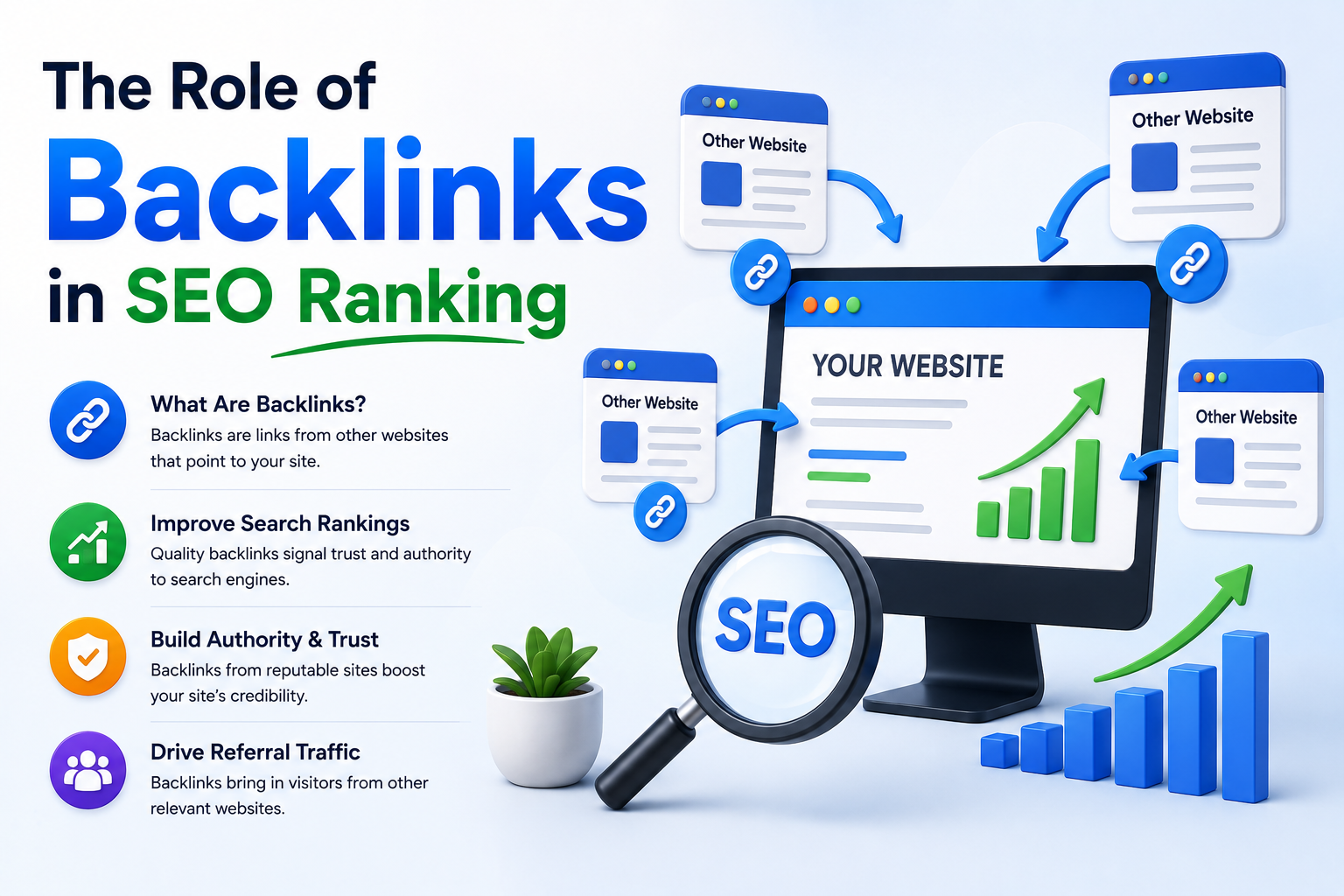
Think of backlinks as digital recommendations. When another website links to your content, it signals to search engines that your information is trustworthy, relevant, and valuable. The more credible websites that reference your content, the stronger your authority becomes in the eyes of search engines.
According to various industry studies, pages ranking on the first page of Google generally have significantly more high-quality backlinks than pages ranking lower in search results. While content quality remains critical, backlinks continue to be one of the strongest indicators of authority and trust.
In this guide, we’ll explore the role of backlinks in SEO ranking, why they matter, how search engines evaluate them, and the strategies businesses can use to build a strong backlink profile that drives long-term organic growth.
Understanding Backlinks in SEO
A backlink is a hyperlink from one website to another. When another website links to your page, that link becomes a backlink for your website.
For example, if a technology publication references your company’s research report and includes a link to your website, you’ve earned a backlink.
Search engines view backlinks as endorsements. The logic is straightforward: if reputable websites are linking to your content, it must offer value to users.
However, not all backlinks are equal.
Years ago, businesses could improve rankings simply by acquiring large numbers of links. Modern search algorithms are far more sophisticated. Today, quality, relevance, authority, and trustworthiness matter much more than volume.
A single backlink from a respected industry publication may provide more SEO value than hundreds of low-quality links from irrelevant websites.
This shift has transformed backlink building from a numbers game into a strategic digital marketing activity focused on earning credibility.
Why Backlinks Matter for SEO Rankings
Backlinks Help Search Engines Measure Authority
Search engines aim to provide users with the most reliable and useful information possible.
When authoritative websites link to your content, search engines interpret those links as votes of confidence.
Imagine two companies publishing similar content on cybersecurity trends. If one company has backlinks from respected technology publications, universities, and industry organizations, search engines are more likely to view that company as an authoritative source.
As a result, its content often ranks higher.
Authority has become one of the most important factors influencing competitive search rankings, especially in industries such as healthcare, finance, technology, legal services, and enterprise software.
Backlinks Improve Organic Search Visibility
Ranking on the first page of Google can dramatically increase website traffic.
Backlinks contribute to this visibility by helping search engines understand that your content deserves attention.
When multiple trusted websites point toward your content, search engines gain additional confidence in its value. This confidence can lead to higher rankings for targeted keywords and phrases.
For businesses, improved visibility means:
- Increased organic traffic
- More qualified leads
- Higher brand awareness
- Greater market credibility
- Better conversion opportunities
This is why backlink acquisition remains a core component of modern SEO strategies.
Backlinks Accelerate Content Discovery
Search engine crawlers continuously scan the web by following links.
When authoritative websites link to your pages, search engines can discover and index your content more quickly.
This is particularly valuable for businesses that frequently publish:
- Industry reports
- Product updates
- Research studies
- Thought leadership content
- News announcements
Faster indexing helps new content appear in search results sooner, allowing companies to capitalize on trending topics and market opportunities.
The Difference Between Quality and Quantity
One of the biggest misconceptions in SEO is that more backlinks automatically mean better rankings.
The reality is much more nuanced.
What Makes a Backlink High Quality?
Several factors influence backlink quality.
Relevance
Links from websites within your industry or niche generally carry greater value.
For example, a SaaS company receiving backlinks from software review sites, technology publications, and business blogs gains more SEO benefit than links from unrelated websites.
Relevance helps search engines understand contextual authority.
Domain Authority
Links from trusted and established websites typically have a stronger impact.
Well-known media outlets, educational institutions, government websites, and respected industry organizations often provide highly valuable backlinks.
Their credibility transfers some authority to the linked website.
Editorial Placement
Backlinks naturally placed within high-quality content tend to perform better than links inserted into directories or low-value pages.
Editorial links indicate genuine recommendations rather than artificial SEO manipulation.
Traffic Potential
Quality backlinks can generate direct referral traffic in addition to SEO value.
If a popular industry publication links to your website, visitors may click through to learn more about your business, products, or services.
This creates an additional source of qualified leads.
How Google Evaluates Backlinks
Google’s algorithms analyze backlinks using multiple signals.
Rather than simply counting links, Google assesses their overall quality and context.
Trustworthiness
Links from trustworthy websites contribute positively to rankings.
Search engines evaluate the reputation of linking domains and their historical credibility.
Websites with strong editorial standards typically pass more value through their links.
Link Relevance
Google considers how closely related the linking website is to the linked content.
A backlink from a relevant industry source generally carries more weight than one from an unrelated website.
Anchor Text
Anchor text refers to the clickable text used within a hyperlink.
When anchor text accurately describes the destination page, it helps search engines understand the page’s topic.
However, excessive optimization of anchor text can appear manipulative and may trigger algorithmic scrutiny.
Link Diversity
A natural backlink profile includes links from various sources.
Search engines generally prefer diversity over dependency on a small number of websites.
Links from blogs, news sites, business directories, educational institutions, and industry organizations can contribute to a healthy backlink profile.
The Business Impact of Strong Backlinks
Increased Brand Credibility
Consumers naturally trust businesses featured on reputable websites.
When respected publications, industry blogs, or research platforms link to your content, they indirectly validate your expertise.
This validation can influence purchasing decisions, particularly in B2B markets where trust plays a significant role in vendor selection.
More Qualified Leads
Backlinks don’t only improve rankings.
They also introduce your brand to new audiences.
For example, a cloud software company featured in a technology publication may attract decision-makers actively researching digital transformation solutions.
These visitors often arrive with higher purchase intent than general website traffic.
Competitive Advantage
In competitive industries, backlinks often become the deciding factor between ranking positions.
Two websites may have similar content quality and technical SEO performance.
The website with stronger authority and a more robust backlink profile often secures higher rankings.
This advantage can translate into substantial differences in traffic, leads, and revenue.
Effective Strategies for Building High-Quality Backlinks
Create Exceptional Content
The foundation of successful link building is creating content people genuinely want to reference.
Businesses that publish unique insights, original research, industry reports, and comprehensive guides naturally attract backlinks over time.
Examples include:
- Market research reports
- Industry trend analysis
- Data-driven studies
- Expert interviews
- Comprehensive resource guides
Content that solves real business problems tends to earn more links.
Invest in Thought Leadership
Thought leadership has become a powerful backlink generation strategy.
When executives, founders, CTOs, and industry experts share valuable perspectives, publishers are more likely to reference their insights.
Regularly contributing expert opinions, publishing articles, and participating in industry discussions can significantly increase backlink opportunities.
Digital PR and Media Outreach
Digital public relations combines traditional PR with SEO objectives.
Companies can proactively pitch stories, research findings, and expert commentary to journalists and industry publications.
Successful media placements often result in authoritative backlinks while simultaneously increasing brand exposure.
This dual benefit makes digital PR one of the most effective modern link-building approaches.
Guest Publishing on Relevant Websites
Contributing high-quality content to reputable industry websites remains an effective strategy when done correctly.
The focus should always be on delivering value rather than simply acquiring links.
Well-written guest articles can establish authority, reach new audiences, and generate quality backlinks.
Build Strategic Partnerships
Partnerships often create natural backlink opportunities.
Technology vendors, industry associations, business partners, and professional organizations frequently feature partner companies on their websites.
These relationships can generate relevant and trustworthy backlinks while strengthening business networks.
Common Backlink Mistakes Businesses Should Avoid
Buying Low-Quality Links
Purchasing backlinks from spammy networks remains one of the most harmful SEO practices.
While these links may provide short-term gains, they often lead to long-term ranking issues.
Search engines have become increasingly effective at detecting artificial link schemes.
Focusing Only on Quantity
Many businesses still chase large numbers of backlinks without considering quality.
A smaller number of authoritative backlinks often delivers better results than hundreds of low-value links.
Ignoring Relevance
Links from unrelated websites provide limited SEO value and may appear unnatural.
Relevance should remain a key consideration in every link-building campaign.
Neglecting Content Quality
No backlink strategy can compensate for poor content.
Businesses must continue investing in valuable, informative, and engaging content that deserves to be linked to.
The Future of Backlinks in SEO
As artificial intelligence continues influencing search algorithms, many marketers wonder whether backlinks will lose importance.
Current trends suggest otherwise.
Search engines increasingly prioritize trust, expertise, authority, and credibility. Backlinks remain one of the strongest external indicators of these qualities.
However, the emphasis is shifting further toward quality and authenticity.
Future SEO success will likely depend on earning links through genuine expertise, valuable content, strong brand reputation, and meaningful industry relationships.
Companies that focus on providing real value will continue benefiting from backlinks as a key ranking signal.
Measuring Backlink Success
Businesses should regularly monitor backlink performance using SEO analytics tools.
Key metrics include:
- Referring domains
- Domain authority of linking sites
- Organic traffic growth
- Keyword ranking improvements
- Referral traffic
- Conversion rates from linked sources
Measuring these indicators helps organizations understand which strategies generate the strongest SEO and business outcomes.
Successful backlink campaigns should contribute not only to rankings but also to broader business objectives such as lead generation and revenue growth.
Conclusion
Backlinks remain one of the most influential factors in SEO ranking because they help search engines evaluate authority, trustworthiness, and relevance.
For startups, SMEs, enterprises, and digitally transforming organizations, a strong backlink profile can significantly improve search visibility, organic traffic, brand credibility, and lead generation.
The most effective backlink strategies are no longer about acquiring the largest number of links. Instead, they focus on earning high-quality, relevant backlinks through exceptional content, thought leadership, digital PR, and genuine industry relationships.
Businesses that prioritize quality over quantity and view backlinks as a long-term investment in authority are far more likely to achieve sustainable SEO success.
As search engines continue evolving, credibility and trust will remain central ranking factors—and backlinks will continue serving as one of the strongest signals of both.
Frequently Asked Questions (FAQs)
What are backlinks in SEO?
Backlinks are links from one website to another. They act as signals of trust and authority, helping search engines determine the credibility and relevance of a webpage.
Why are backlinks important for Google rankings?
Backlinks help search engines understand which websites are trusted by others. High-quality backlinks often contribute to better rankings, increased visibility, and higher organic traffic.
Are all backlinks valuable?
No. Backlinks from reputable, relevant, and authoritative websites are generally more valuable than links from low-quality or unrelated sites.
How many backlinks do I need to rank?
There is no specific number. Rankings depend on backlink quality, competition, content relevance, technical SEO, and overall website authority.
Can bad backlinks hurt SEO?
Yes. Spammy, manipulative, or low-quality backlinks can negatively affect SEO performance and may lead to penalties or reduced rankings.
What is the best way to earn backlinks?
Creating high-value content, publishing original research, building industry relationships, engaging in digital PR, and establishing thought leadership are among the most effective methods.
Ready to Strengthen Your SEO Strategy?
Backlinks are only one part of a successful SEO ecosystem. To maximize search visibility and business growth, organizations need the right combination of technical SEO, content strategy, website performance, digital marketing expertise, and ongoing optimization.
Partnering with an experienced technology and digital marketing team can help you build a sustainable SEO strategy that drives measurable results. Whether you’re launching a startup, scaling an enterprise platform, or accelerating digital transformation, choosing the right technology partner can make the difference between simply having a website and becoming a market leader online.