


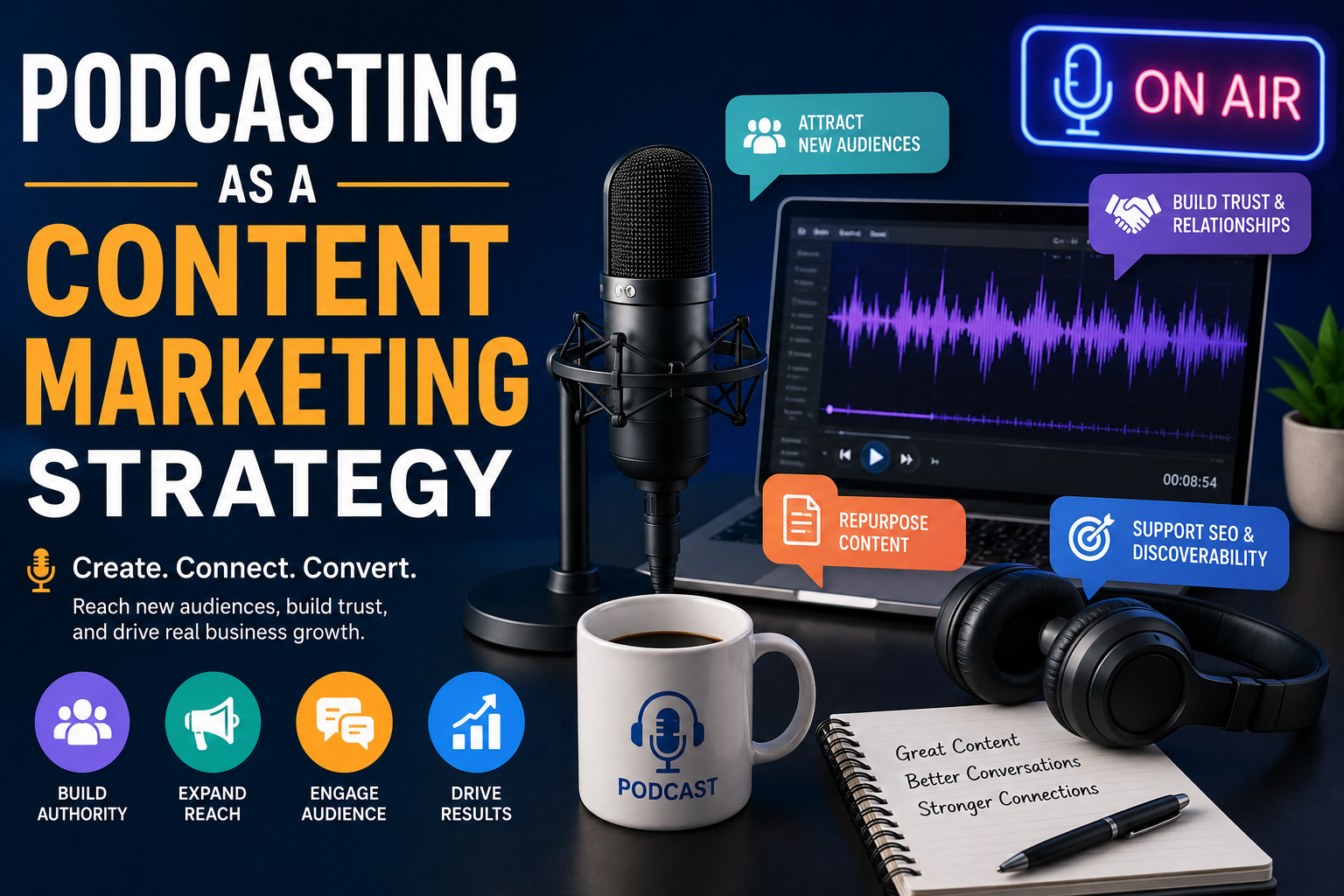
Content marketing has evolved dramatically over the last decade. Businesses are no longer competing solely through blog articles, social media posts, or email campaigns. Today’s audiences consume content across multiple formats, and one of the fastest-growing channels is podcasting.
From startup founders sharing industry insights to global enterprises interviewing thought leaders, podcasts have become a powerful way to engage audiences, build authority, and create meaningful relationships. Unlike traditional marketing channels that often compete for attention through short-form content, podcasts allow brands to have deeper conversations with their audiences.
The rise of remote work, mobile content consumption, and on-demand media has accelerated podcast adoption worldwide. People now listen while commuting, exercising, working, or traveling. This creates a unique opportunity for businesses to stay connected with potential customers during moments when reading articles or watching videos may not be practical.
For organizations investing in digital transformation and long-term brand growth, podcasting is no longer just an experimental channel. It has become a strategic content marketing asset that can strengthen brand credibility, generate leads, nurture prospects, and position companies as industry leaders.
In this article, we’ll explore why podcasting has become such an effective content marketing strategy, how businesses can leverage it successfully, and what best practices can help maximize results.
The Growing Popularity of Podcasting
Podcasting has experienced remarkable growth across industries and demographics. Millions of listeners now consume podcast content regularly, making it one of the most engaging digital media formats available today.
Unlike social media content that often disappears within hours, podcast episodes can continue generating value for months or even years. A well-produced episode discussing industry trends, business challenges, or expert insights can remain relevant long after its initial publication.
The popularity of podcasting is driven by convenience. Audiences can consume content while multitasking, making podcasts a highly accessible form of education and entertainment. This level of accessibility gives brands more opportunities to connect with listeners in a natural and less intrusive way.
For business leaders, podcasting offers something that many marketing channels struggle to deliver: sustained attention. While a social media post may receive only a few seconds of engagement, podcast listeners often spend 20 to 60 minutes with a brand in a single session.
Why Podcasting Works as a Content Marketing Strategy
One of the primary reasons podcasting succeeds is its ability to build trust. Modern consumers are increasingly skeptical of traditional advertising. They prefer authentic conversations and expert insights over direct promotional messages.
A podcast allows organizations to demonstrate expertise rather than simply claim it. When founders, executives, product specialists, or industry experts discuss relevant topics in depth, audiences gain confidence in their knowledge and capabilities.
Podcasting also humanizes a brand. Hearing a real voice creates a stronger emotional connection than reading text alone. Listeners often develop a sense of familiarity with podcast hosts, which strengthens brand affinity over time.
Another significant advantage is audience loyalty. Podcast subscribers tend to be highly engaged because they intentionally choose content that aligns with their interests. This creates a valuable opportunity for businesses to nurture long-term relationships with prospects and customers.
Building Thought Leadership Through Podcasts
Thought leadership remains a critical objective for many organizations, particularly in competitive industries such as technology, finance, healthcare, and professional services.
A podcast provides a platform for sharing expertise, discussing industry trends, and offering unique perspectives on emerging challenges. Over time, consistent delivery of valuable insights can position a company as a trusted authority.
Consider how many successful technology companies leverage podcasts to discuss innovation, leadership, cybersecurity, artificial intelligence, and digital transformation. These conversations help establish credibility while attracting audiences interested in those topics.
Instead of publishing occasional opinion pieces, businesses can create an ongoing dialogue with their market. This consistency reinforces expertise and strengthens brand recognition.
Podcasting and Lead Generation
Many organizations initially view podcasts as branding tools, but they can also contribute significantly to lead generation efforts.
Podcast listeners often represent highly qualified audiences because they actively seek information related to specific industries or challenges. By addressing common pain points and providing actionable solutions, businesses can attract prospects who are already interested in their offerings.
The customer journey frequently begins with education. A podcast can introduce potential customers to a company’s expertise before they explore products or services. As trust develops, listeners become more likely to visit the website, subscribe to newsletters, attend webinars, or request consultations.
When integrated with a broader marketing strategy, podcasting becomes a valuable lead nurturing channel rather than a standalone content initiative.
Strengthening Brand Authority in Competitive Markets
Standing out in crowded markets is increasingly difficult. Every company is producing blogs, social media content, videos, and advertising campaigns.
Podcasting offers a different approach. It enables brands to create long-form discussions that explore complex topics in greater detail. This depth often resonates with decision-makers who want comprehensive information rather than surface-level content.
For B2B companies especially, authority is a major competitive advantage. Decision-makers often choose vendors they trust and perceive as knowledgeable. A high-quality podcast can help reinforce that perception.
Organizations that consistently publish insightful episodes often become recognized sources of industry knowledge, making them more attractive to potential clients and partners.
How Podcasts Support the Entire Content Marketing Ecosystem
One of the most valuable aspects of podcasting is its ability to fuel other marketing channels.
A single podcast episode can generate content across multiple formats, maximizing return on investment and extending reach.
Content opportunities include:
- Blog articles based on episode discussions.
- Social media snippets and quotes.
- Email newsletter content.
- Video clips for marketing campaigns.
- Thought leadership content for executives.
This content repurposing strategy allows businesses to create more marketing assets without constantly generating new ideas from scratch.
As a result, podcasting often becomes the foundation of an integrated content marketing ecosystem.
Real-World Business Examples
Many successful organizations have demonstrated the effectiveness of podcast marketing.
Technology Companies
Technology brands frequently use podcasts to explain complex concepts, discuss innovation, and showcase customer success stories. These conversations help educate audiences while positioning the company as an industry expert.
Professional Services Firms
Consulting firms, legal organizations, and financial service providers often create podcasts focused on industry trends, regulatory changes, and business strategies. This approach strengthens credibility and attracts decision-makers seeking expert guidance.
Startup Founders
Many startup founders launch podcasts to build personal and corporate brands simultaneously. By interviewing industry leaders and sharing entrepreneurial experiences, they expand networks while increasing visibility for their companies.
These examples demonstrate that podcasting can support businesses across different industries and growth stages.
Creating a Successful Business Podcast
Launching a podcast requires more than purchasing recording equipment and publishing episodes. Success depends on having a clear strategy aligned with business objectives.
Before recording the first episode, organizations should define their target audience and determine what value the podcast will provide.
Important considerations include:
- Audience interests and challenges.
- Podcast format and episode structure.
- Publishing frequency.
- Content themes and topics.
- Business goals and success metrics.
A podcast designed around audience needs will always perform better than one focused solely on promoting products or services.
Choosing the Right Podcast Format
Different formats serve different purposes.
Interview-based podcasts are particularly effective because they introduce diverse perspectives and allow brands to leverage guest expertise. Solo episodes can establish authority by providing direct insights from company leaders.
Panel discussions create dynamic conversations that explore multiple viewpoints, while storytelling formats can make complex topics more engaging.
The best format depends on audience preferences, available resources, and overall marketing objectives.
Consistency is often more important than format. Audiences appreciate reliable publishing schedules and predictable content quality.
Measuring Podcast Marketing Success
Like any marketing initiative, podcasting should be measured against clear performance indicators.
While download numbers are important, they should not be the only metric considered.
Businesses should also evaluate:
- Audience growth over time.
- Website traffic generated from episodes.
- Newsletter subscriptions.
- Lead generation impact.
- Customer engagement and retention.
Many organizations discover that podcasts contribute indirectly to revenue by strengthening trust and shortening sales cycles.
Because podcasting often supports awareness and consideration stages, success should be evaluated within the broader customer journey rather than through direct attribution alone.
Common Podcasting Mistakes Businesses Should Avoid
Many companies launch podcasts enthusiastically but struggle to maintain momentum.
One common mistake is prioritizing promotion over value. Audiences subscribe to learn, not to hear constant sales pitches. Educational and insightful content consistently outperforms heavily promotional episodes.
Another challenge is inconsistency. Publishing irregularly can reduce audience engagement and make growth more difficult.
Poor audio quality can also damage credibility. While expensive equipment is not mandatory, professional sound quality significantly improves the listener experience.
Finally, some organizations underestimate the importance of distribution. Simply publishing episodes is not enough. Effective promotion across websites, email campaigns, social media platforms, and professional networks is essential for audience growth.
The Future of Podcasting in Content Marketing
The future of podcasting looks exceptionally promising. As audiences continue seeking authentic and convenient content experiences, podcasts are likely to become an even more important component of digital marketing strategies.
Advancements in artificial intelligence, content personalization, and analytics are making podcast production and distribution more efficient than ever. Businesses can now identify audience preferences, optimize content strategies, and improve engagement with greater precision.
The growing popularity of smart devices, connected vehicles, and voice technology will further expand podcast consumption. Companies that invest early in building podcast audiences may gain significant competitive advantages in the years ahead.
For startups, SMEs, and enterprises alike, podcasting represents an opportunity to create meaningful connections while strengthening brand authority in increasingly crowded markets.
Conclusion
Podcasting has evolved from a niche media format into a powerful content marketing strategy capable of delivering long-term business value. It enables organizations to build trust, establish thought leadership, generate leads, and strengthen customer relationships through authentic conversations.
Unlike many forms of content that compete for fleeting attention, podcasts encourage deeper engagement and sustained audience loyalty. They provide businesses with a unique platform to educate, inspire, and influence decision-makers while supporting broader marketing objectives.
As digital competition continues to increase, organizations that embrace podcasting strategically will be better positioned to differentiate themselves, expand their reach, and build stronger connections with their target audiences.
Whether you’re a startup seeking visibility, an SME aiming to establish credibility, or an enterprise focused on market leadership, podcasting can become a valuable asset within your content marketing strategy.
Frequently Asked Questions
Is podcasting effective for B2B marketing?
Yes. Podcasting is highly effective for B2B marketing because it allows businesses to share expertise, discuss industry challenges, and build trust with decision-makers through long-form conversations.
How often should businesses publish podcast episodes?
Consistency matters more than frequency. Many successful business podcasts publish weekly, bi-weekly, or monthly, depending on available resources and audience expectations.
Can podcasts generate leads?
Yes. Podcasts can attract qualified prospects by providing valuable educational content that builds trust and encourages listeners to engage further with a brand.
Do small businesses need expensive equipment to start a podcast?
No. Many successful podcasts begin with relatively affordable equipment. Content quality, consistency, and audience value are generally more important than expensive production setups.
How long should a business podcast episode be?
The ideal length depends on the audience and topic. Most business podcasts perform well between 20 and 60 minutes, providing enough time for meaningful discussion without overwhelming listeners.
Ready to Launch a High-Impact Podcast Strategy?
A successful podcast requires more than recording conversations. It demands strategic planning, audience understanding, content expertise, technology integration, distribution, analytics, and long-term optimization.
If your organization wants to leverage podcasting as part of a broader digital transformation and content marketing strategy, partnering with an experienced technology and marketing team can accelerate results. The right partner can help you build a scalable podcast ecosystem that drives brand authority, audience engagement, lead generation, and sustainable business growth.