


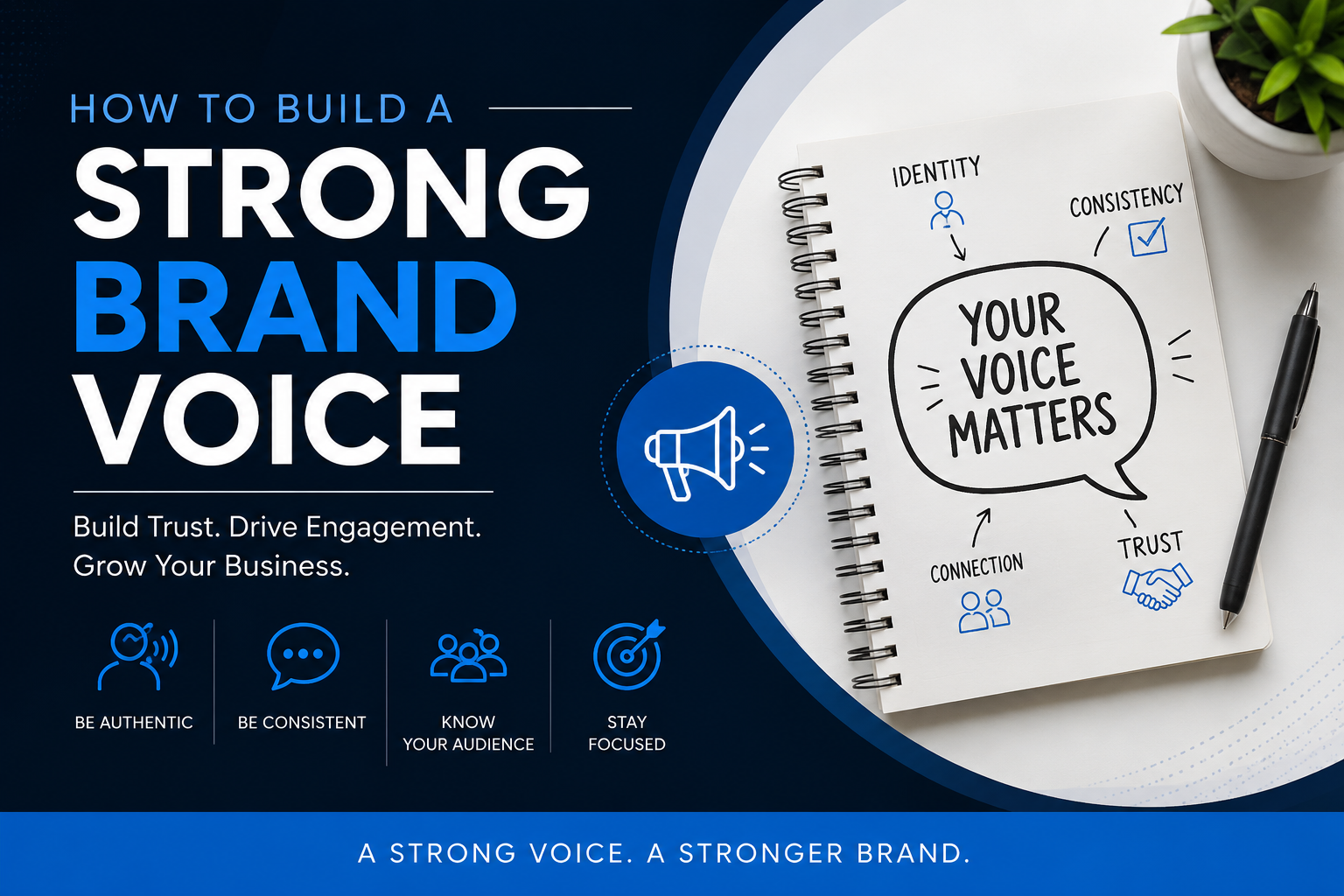
In today’s digital-first business environment, customers are exposed to thousands of marketing messages every single day. Brands compete not only on products and pricing but also on personality, communication style, and emotional connection.
That is where brand voice becomes one of the most powerful business assets.
A strong brand voice helps businesses sound consistent, recognizable, and trustworthy across every platform — from websites and social media to emails, advertisements, and customer support.
Whether you are a startup building market presence, an SME trying to stand out, or an enterprise scaling globally, your brand voice influences how people perceive your company.
Companies with a consistent brand presentation across channels can increase revenue by up to 23%, according to multiple branding studies. Consistency builds familiarity, and familiarity builds trust.
But building a strong brand voice is not just about sounding professional or creative. It is about creating a communication identity that reflects your company’s values, audience expectations, and business goals.
In this guide, we will explore how businesses can create a powerful and memorable brand voice that supports long-term growth.
What Is a Brand Voice?
Brand voice is the unique personality and tone your business uses when communicating with customers.
It defines:
- How your company sounds
- The language you use
- The emotions you convey
- The way you present information
- How audiences feel when interacting with your brand
Think of brand voice as the human personality behind your business.
For example:
- A fintech company may sound secure, intelligent, and confident.
- A startup targeting Gen Z may sound casual, energetic, and playful.
- A luxury brand may communicate with elegance and exclusivity.
- A healthcare company may prioritize empathy and clarity.
Your visual identity helps customers recognize your brand. Your voice helps them remember it.
Why Brand Voice Matters in Modern Business
Many businesses underestimate the importance of communication consistency. They focus heavily on logos, websites, and advertising while ignoring how the brand actually speaks.
A strong brand voice offers several major benefits.
Builds Brand Recognition
When your messaging style remains consistent across all channels, customers quickly recognize your content.
This improves brand recall and strengthens customer familiarity.
Creates Customer Trust
Trust is one of the biggest drivers of modern purchasing decisions.
Customers are more likely to engage with brands that sound authentic, transparent, and consistent.
Mixed messaging often creates confusion and weakens credibility.
Improves Marketing Performance
Strong brand communication improves:
- Engagement rates
- Social media interaction
- Email open rates
- Customer retention
- Conversion rates
People connect more with brands that feel human rather than overly corporate.
Supports Competitive Differentiation
In crowded markets, products often look similar.
Your voice becomes a differentiator.
Two companies may offer nearly identical services, but the one with stronger communication usually creates deeper audience loyalty.
The Difference Between Brand Voice and Tone
These terms are often used interchangeably, but they are not the same.
Brand Voice
Your overall personality and communication identity.
It remains relatively consistent.
Tone
The emotional variation depending on context.
For example, your brand voice may always be professional and helpful, but your tone may change depending on the situation:
- Excited during product launches
- Empathetic during customer issues
- Educational in blog articles
- Confident in sales messaging
Understanding this difference helps businesses stay consistent while still sounding natural.
Step 1: Define Your Brand Personality
Before building a voice, you need to define your brand personality.
Ask questions like:
- If your brand were a person, how would it sound?
- What values define your company?
- How should customers feel after interacting with your business?
- What communication style fits your industry and audience?
A simple exercise is choosing 3–5 personality traits.
Examples:
| Industry | Brand Personality Traits |
|---|---|
| SaaS | Smart, clear, innovative |
| Healthcare | Compassionate, trustworthy, calm |
| E-commerce | Friendly, energetic, approachable |
| Enterprise IT | Confident, expert, strategic |
These traits become the foundation of your messaging strategy.
Step 2: Understand Your Target Audience
Your brand voice should connect with your audience — not just reflect internal preferences.
A communication style that works for startups may not work for enterprise buyers.
Research your audience carefully.
Focus on:
- Customer demographics
- Pain points
- Communication preferences
- Industry expectations
- Buyer behavior
- Digital platform usage
For example:
A B2B cybersecurity company targeting CTOs should prioritize clarity, authority, and expertise.
Meanwhile, a lifestyle startup targeting younger audiences may use conversational and trend-driven messaging.
The best brand voices balance authenticity with audience expectations.
Step 3: Analyze Your Existing Communication
Many businesses already have fragments of a brand voice without realizing it.
Review your current:
- Website copy
- Social media captions
- Blog articles
- Emails
- Sales presentations
- Customer support messages
- Advertising campaigns
Look for patterns.
Ask:
- Does the communication feel consistent?
- Are different departments using different styles?
- Does the messaging reflect company values?
- Does the tone match the audience?
This audit helps identify communication gaps.
In many organizations, marketing sounds modern while support feels robotic. That inconsistency weakens the brand experience.
Step 4: Create Brand Voice Guidelines
Once your voice is defined, document it clearly.
Brand voice guidelines help teams maintain consistency across departments and channels.
Your guidelines should include:
Core Personality Traits
Example:
- Professional but approachable
- Confident but not arrogant
- Informative but simple
Vocabulary Preferences
Define:
- Preferred terminology
- Industry jargon rules
- Words to avoid
- Grammar style
- Formatting preferences
Tone Examples
Provide real examples showing:
- Correct messaging
- Incorrect messaging
- Tone adjustments by platform
Communication Rules
Include guidance for:
- Social media
- Customer support
- Blogs
- Ads
- Email marketing
- Internal communication
Clear documentation becomes especially important as businesses scale.
Step 5: Keep Messaging Consistent Across Channels
Consistency is what transforms communication into brand identity.
Your website, LinkedIn posts, newsletters, and customer support should feel like they come from the same company.
That does not mean every platform should sound identical.
Instead:
- Adapt format to the platform
- Maintain the same core personality
- Keep messaging aligned with brand values
For example:
A professional brand can still sound lighter on Instagram while remaining more formal in enterprise sales communication.
The key is maintaining recognizable identity.
Step 6: Make Your Brand Sound Human
One of the biggest branding mistakes businesses make is sounding overly corporate.
Modern audiences prefer authenticity and clarity.
Instead of saying:
“Leveraging innovative solutions to optimize operational efficiency.”
Say:
“We help businesses work faster and smarter.”
Simple language improves readability, accessibility, and engagement.
Human communication creates emotional connection.
This is especially important in digital transformation industries where technical messaging can quickly become overwhelming.
Step 7: Use Storytelling to Strengthen Brand Voice
Stories make brands memorable.
People connect with experiences more than features.
Strong storytelling can humanize businesses and strengthen emotional engagement.
Ways to integrate storytelling:
- Customer success stories
- Founder journeys
- Behind-the-scenes content
- Product development experiences
- Real business challenges
- Industry insights
For example, many successful startups build loyalty by openly sharing their growth journey and lessons learned.
This creates transparency and trust.
Step 8: Train Internal Teams
A strong brand voice is not only a marketing responsibility.
Sales teams, support teams, executives, content writers, and social media managers all influence brand perception.
Internal training helps maintain consistency.
Consider:
- Brand workshops
- Communication templates
- Messaging playbooks
- AI content review processes
- Editorial standards
As companies grow, this becomes critical.
Without alignment, brand communication often becomes fragmented.
Step 9: Adapt Without Losing Identity
Markets evolve constantly.
Your brand voice should evolve too — without losing its core identity.
For example:
- Customer expectations change
- Platforms evolve
- New audiences emerge
- Industry trends shift
A modern brand voice should remain flexible while staying recognizable.
Companies that fail to adapt often appear outdated.
However, dramatic changes can confuse loyal customers.
Balance is important.
Real-World Examples of Strong Brand Voice
Apple
Apple communicates with simplicity, confidence, and clarity.
Its messaging avoids unnecessary technical complexity and focuses on user experience.
The brand voice feels premium yet accessible.
Nike
Nike uses motivational and empowering communication.
Its messaging consistently inspires action and ambition.
This emotional consistency strengthens brand loyalty worldwide.
Slack
Slack built a friendly and conversational brand voice in a traditionally formal enterprise software market.
This helped the company feel approachable and modern.
Common Mistakes Businesses Make
Even strong companies sometimes struggle with brand consistency.
Here are some common mistakes to avoid.
Trying to Sound Like Everyone Else
Copying competitors weakens originality.
Your voice should reflect your unique identity.
Being Too Formal
Overly complex corporate language creates distance between brands and customers.
Inconsistent Messaging
Different communication styles across departments confuse audiences.
Ignoring Audience Expectations
A brand voice should resonate with customers, not only internal teams.
Overusing Trends
Trend-based communication can quickly feel outdated if overused.
The Role of AI in Brand Voice Development
AI tools are transforming content creation, but businesses must use them carefully.
AI can help:
- Generate ideas
- Maintain formatting consistency
- Improve content scalability
- Support multi-channel publishing
However, human oversight remains essential.
Without strategic editing, AI-generated content often feels generic.
Businesses should use AI to support brand voice — not replace authentic communication.
The companies that succeed will combine automation with strong human-centered branding.
How Brand Voice Impacts SEO and Digital Growth
Brand voice also plays a growing role in SEO performance.
Search engines increasingly prioritize:
- Helpful content
- User engagement
- Readability
- Experience-driven writing
A strong and consistent voice improves:
- Time on page
- Engagement signals
- Social sharing
- Content trustworthiness
- Audience loyalty
Modern SEO is no longer only about keywords.
It is about creating meaningful content experiences.
Brands that sound authentic usually perform better over time.
Measuring the Success of Your Brand Voice
Brand voice effectiveness should be monitored regularly.
Key indicators include:
- Social engagement
- Customer feedback
- Brand mentions
- Email performance
- Conversion rates
- Customer retention
- Website engagement metrics
You can also conduct customer surveys asking:
- How would you describe our brand personality?
- Does our communication feel trustworthy?
- What emotions do you associate with our brand?
If customer perception aligns with your intended voice, your branding strategy is working.
The Future of Brand Voice
As digital competition grows, brand voice will become even more important.
Consumers increasingly prefer brands that feel:
- Human
- Transparent
- Purpose-driven
- Consistent
- Relatable
With AI-generated content becoming more common, authentic communication will become a major competitive advantage.
Businesses that invest in clear and meaningful brand identity today will build stronger long-term customer relationships tomorrow.
Conclusion
Building a strong brand voice is not a one-time marketing exercise.
It is an ongoing business strategy that shapes how customers perceive, trust, and remember your company.
A powerful brand voice helps businesses stand out in crowded markets, strengthen customer relationships, and improve long-term growth.
The most successful brands are not always the loudest. They are often the most consistent, authentic, and recognizable.
Whether you are a startup building market presence or an enterprise scaling globally, investing in a clear communication identity can transform your digital presence and customer experience.
As technology and customer expectations continue evolving, businesses that communicate with clarity, personality, and authenticity will lead the future of branding.
FAQs
What is a brand voice?
Brand voice is the consistent personality and communication style a company uses across all marketing and customer interactions.
Why is brand voice important?
A strong brand voice improves trust, brand recognition, engagement, and customer loyalty while helping businesses stand out from competitors.
How do I define my brand voice?
Start by identifying your company values, audience preferences, and communication goals. Then create messaging guidelines that reflect your brand personality.
Can small businesses benefit from brand voice strategy?
Yes. A strong brand voice helps startups and SMEs build recognition and credibility even in competitive industries.
How often should brand voice guidelines be updated?
Businesses should review brand voice guidelines regularly to ensure alignment with evolving audience expectations and market trends.
Ready to Build a Stronger Digital Brand?
Your brand voice influences how customers perceive your business across every platform and interaction. Building a consistent, modern, and engaging communication strategy requires the right balance of branding, technology, content, and customer experience.
Partnering with the right digital and technology experts can help your business create a scalable brand presence that drives visibility, engagement, and long-term growth in today’s competitive market.