


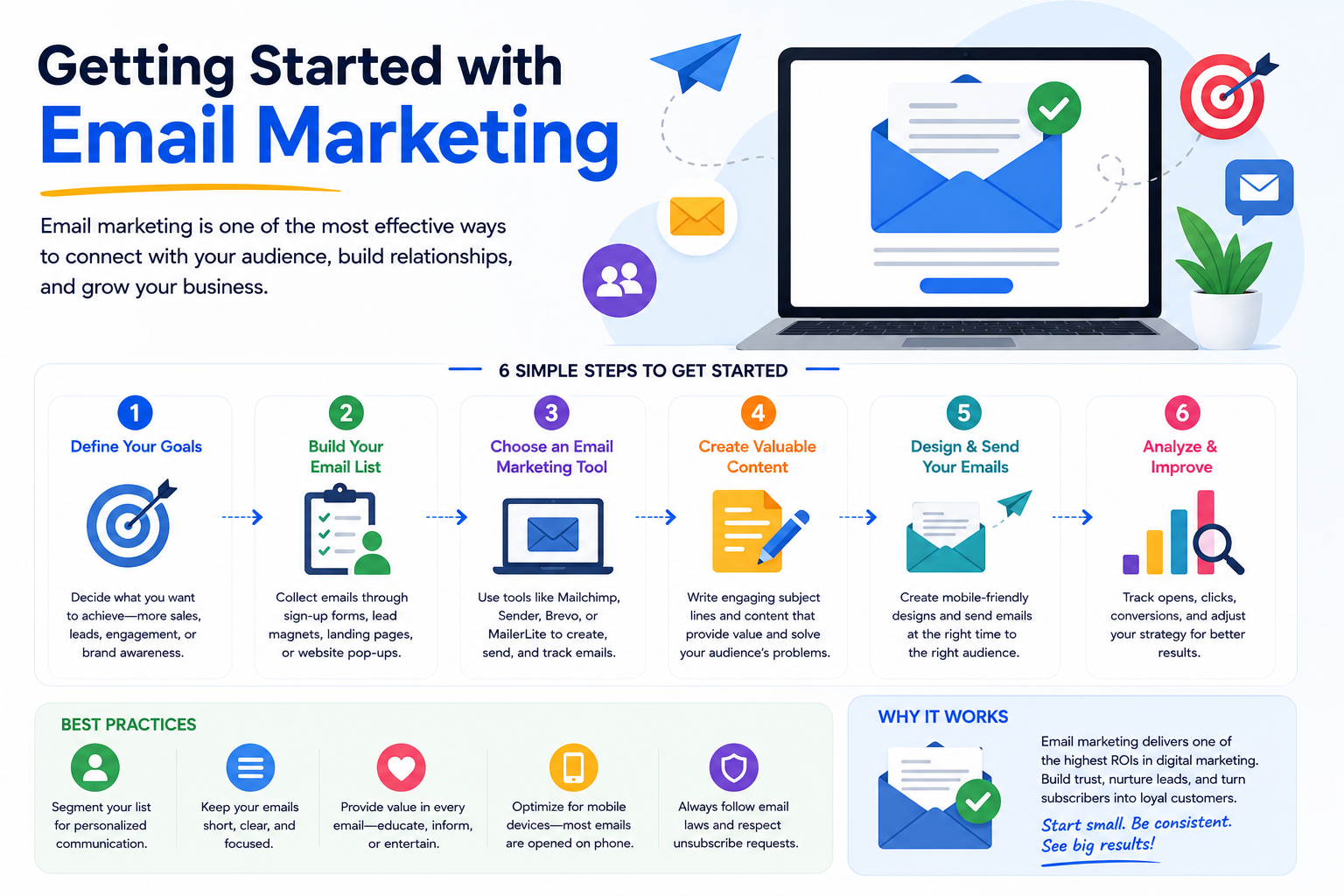
Despite the rapid growth of social media, video marketing, AI-powered advertising, and search engine optimization, email marketing remains one of the most effective digital marketing channels available today. Businesses of all sizes continue to rely on email because it delivers direct communication, measurable results, and a strong return on investment.
For startups looking to build brand awareness, SMEs aiming to nurture leads, and enterprises focused on customer retention, email marketing offers a scalable and cost-effective solution. Unlike social media platforms where algorithms determine visibility, email allows businesses to communicate directly with their audience whenever they choose.
Industry studies consistently show that email marketing delivers one of the highest returns among digital marketing channels. The reason is simple: people who subscribe to your emails have already expressed interest in your business, products, or services. This creates opportunities to build trust, educate prospects, and drive conversions over time.
If you are planning to launch your first email marketing campaign or improve your existing strategy, this guide will help you understand the fundamentals and establish a strong foundation for long-term success.
What Is Email Marketing?
Email marketing is the process of sending targeted messages to a group of subscribers through email. These messages can be promotional, educational, transactional, or relationship-focused depending on business objectives.
The goal is not simply to send emails. Effective email marketing focuses on delivering valuable and relevant content that encourages engagement and strengthens customer relationships.
Businesses commonly use email marketing to:
Whether you run an eCommerce store, SaaS company, consulting firm, healthcare organization, or technology startup, email marketing can support multiple business goals simultaneously.
Why Email Marketing Still Matters in 2026
Many business owners wonder whether email marketing remains relevant in an era dominated by social media and AI-driven marketing platforms.
The reality is that email continues to outperform many digital channels when it comes to engagement and conversion rates. Unlike social media audiences that are controlled by third-party platforms, email subscriber lists are owned assets. Businesses maintain direct access to their audience without relying on changing algorithms.
Email marketing also provides several advantages:
Direct Communication
Emails arrive directly in a subscriber’s inbox, creating a personal communication channel between the brand and the customer.
High Return on Investment
Email campaigns generally require lower investment compared to paid advertising while delivering measurable results.
Better Personalization
Modern email platforms allow businesses to customize content based on customer preferences, purchase history, demographics, and behavior.
Easy Performance Tracking
Businesses can monitor open rates, click-through rates, conversions, and engagement metrics to continuously improve campaign performance.
As privacy regulations evolve and customer acquisition costs increase, owned marketing channels like email become even more valuable.
Building a Strong Email Marketing Foundation
Success in email marketing starts long before the first campaign is sent. Businesses need the right infrastructure, strategy, and processes in place.
Define Your Goals
Before selecting software or collecting subscribers, identify what you want to achieve.
Your goals may include increasing sales, generating leads, improving customer retention, promoting events, or educating prospects about your solutions.
Clear objectives make it easier to create relevant content and measure success.
Understand Your Audience
Email marketing works best when messages address specific customer needs.
Take time to understand:
The more you understand your audience, the more effective your campaigns will become.
Choosing the Right Email Marketing Platform
One of the first decisions businesses face is selecting an email marketing platform.
Numerous tools are available in the market, each offering different capabilities and pricing structures. The ideal solution depends on business size, marketing goals, and scalability requirements.
Popular features to consider include:
- Contact management
- Email automation
- Analytics and reporting
- A/B testing
- CRM integration
- Personalization capabilities
A startup may begin with a simple email marketing solution, while an enterprise organization may require advanced automation, segmentation, and integration features.
Investing in the right platform early can save significant time and operational costs as your subscriber base grows.
Growing Your Email Subscriber List
Building a quality email list is one of the most important aspects of email marketing.
Many businesses make the mistake of purchasing email databases in an attempt to accelerate growth. While this may seem attractive, purchased lists often lead to poor engagement, spam complaints, and damaged sender reputation.
Instead, focus on attracting subscribers organically.
Create Valuable Lead Magnets
People are more likely to share their email addresses when they receive something valuable in return.
Examples include:
A compelling lead magnet can significantly increase subscription rates.
Optimize Website Sign-Up Forms
Your website should make email subscriptions easy and visible.
Consider placing subscription forms on:
- Homepage sections
- Blog articles
- Landing pages
- Resource centers
- Checkout pages
Reducing friction during the signup process often leads to higher conversion rates.
Leverage Existing Customer Relationships
Current customers are among the most valuable subscribers because they already trust your brand.
Encourage them to join your email community for updates, educational content, and exclusive opportunities.
Creating Effective Email Content
Once subscribers join your list, content becomes the driving force behind engagement.
Many companies focus heavily on promotion while neglecting value-driven communication. This often results in declining open rates and increasing unsubscribes.
Successful email marketing balances promotional messages with useful and relevant content.
Write Compelling Subject Lines
The subject line determines whether recipients open the email.
Effective subject lines are:
- Clear and concise
- Relevant to the audience
- Benefit-oriented
- Personalized when appropriate
Avoid misleading or clickbait-style subject lines, as they can damage trust.
Focus on Reader Value
Every email should answer an important question:
“What value does this provide to the recipient?”
Educational insights, practical tips, industry trends, and problem-solving content generally perform well because they help readers achieve their goals.
Keep Content Easy to Read
Busy professionals often skim emails rather than reading every word.
Short paragraphs, clear formatting, and logical content flow improve readability and engagement.
Understanding Email Segmentation
Not every subscriber has the same interests or needs.
Email segmentation involves dividing subscribers into smaller groups based on shared characteristics.
Segmentation may include:
- Industry
- Geographic location
- Purchase history
- Engagement level
- Customer lifecycle stage
A technology company, for example, may send different messages to first-time prospects, active customers, and enterprise decision-makers.
Segmented campaigns consistently outperform generic mass emails because the content feels more relevant.
The Power of Email Automation
Automation has transformed email marketing from a manual process into a scalable business growth engine.
Instead of sending individual emails manually, businesses can create workflows that automatically respond to customer actions.
Welcome Email Series
When someone subscribes, an automated welcome sequence can introduce the brand, establish credibility, and encourage engagement.
Lead Nurturing Campaigns
Prospects often require multiple interactions before making purchasing decisions.
Automated nurturing campaigns deliver educational content over time, helping prospects move through the sales funnel.
Customer Retention Programs
Existing customers can receive personalized recommendations, product updates, renewal reminders, and loyalty offers automatically.
This improves customer lifetime value while reducing manual workload.
Real-World Business Example
Imagine a growing SaaS startup offering project management software.
Initially, the company relied heavily on paid advertising to generate leads. While traffic increased, conversion rates remained inconsistent.
The marketing team implemented an email strategy focused on educational content. New subscribers received a welcome series explaining common project management challenges and practical solutions.
Over several months, the company nurtured leads through targeted email campaigns, product demonstrations, and case studies.
As trust increased, more subscribers converted into paying customers. Customer retention also improved because users continued receiving helpful resources after purchase.
This example demonstrates how email marketing supports both acquisition and retention throughout the customer journey.
Key Metrics to Track
Measuring performance is essential for continuous improvement.
Businesses should regularly monitor the following metrics:
These indicators provide valuable insights into audience engagement and campaign effectiveness.
Rather than focusing on a single metric, evaluate overall performance trends to identify opportunities for optimization.
Common Email Marketing Mistakes to Avoid
Many organizations struggle with email marketing because they overlook fundamental best practices.
One common mistake is sending emails too frequently. Excessive communication can overwhelm subscribers and increase unsubscribe rates.
Another issue is failing to personalize content. Generic messages often feel irrelevant and generate lower engagement.
Poor mobile optimization is also a major concern. Since a large percentage of emails are opened on smartphones, responsive design is no longer optional.
Businesses should also avoid neglecting analytics. Without performance tracking, it becomes difficult to understand what works and what needs improvement.
Finally, never purchase email lists. Building a permission-based audience produces better results and protects brand reputation.
The Future of Email Marketing
Email marketing continues to evolve with advances in artificial intelligence, automation, predictive analytics, and customer data platforms.
Businesses are increasingly using AI to personalize content, optimize send times, and improve segmentation accuracy.
Interactive email experiences, dynamic content, and advanced automation workflows are becoming more common across industries.
However, one principle remains unchanged: delivering value to subscribers will always be the foundation of successful email marketing.
Companies that prioritize customer needs and build genuine relationships will continue to see strong results regardless of technological changes.
Why Partnering with the Right Technology Provider Matters
As email marketing programs grow, managing data, automation workflows, integrations, compliance requirements, and performance analytics becomes increasingly complex.
Working with an experienced technology and digital transformation partner can help businesses implement scalable solutions, integrate marketing platforms with CRM systems, and optimize customer engagement strategies.
Whether you are launching your first email campaign or building enterprise-level automation workflows, the right technology partner can accelerate implementation, improve performance, and ensure long-term growth.
Choosing expertise today can save significant time, resources, and operational challenges in the future.
Conclusion
Getting started with email marketing does not require a massive budget or a large team. What it does require is a clear strategy, a deep understanding of your audience, and a commitment to delivering meaningful value.
From building a quality subscriber list to creating engaging content and implementing automation, every step contributes to stronger customer relationships and improved business outcomes.
As digital competition continues to increase, email marketing remains one of the most reliable and cost-effective ways to connect with prospects, nurture leads, and retain customers.
Organizations that invest in a thoughtful email marketing strategy today will be better positioned to drive sustainable growth tomorrow.
Frequently Asked Questions
What is email marketing?
Email marketing is a digital marketing strategy that uses email communication to engage prospects, nurture leads, promote products or services, and build long-term customer relationships.
Is email marketing suitable for small businesses?
Yes. Email marketing is one of the most cost-effective marketing channels available and can deliver strong results for startups, SMEs, and growing businesses.
How often should businesses send marketing emails?
The ideal frequency depends on audience expectations and business goals. Consistency is generally more important than volume. Many businesses find success with weekly or bi-weekly communication.
What is the biggest advantage of email marketing?
The biggest advantage is direct communication with an audience that has voluntarily subscribed, creating opportunities for personalized engagement and higher conversion rates.
Can email marketing be automated?
Yes. Modern email marketing platforms offer automation features that allow businesses to send personalized messages based on customer behavior, lifecycle stage, and engagement activity.
How long does it take to see results from email marketing?
Results vary depending on industry, audience size, and campaign quality. However, businesses often begin seeing measurable engagement and lead generation improvements within the first few months of consistent execution.