


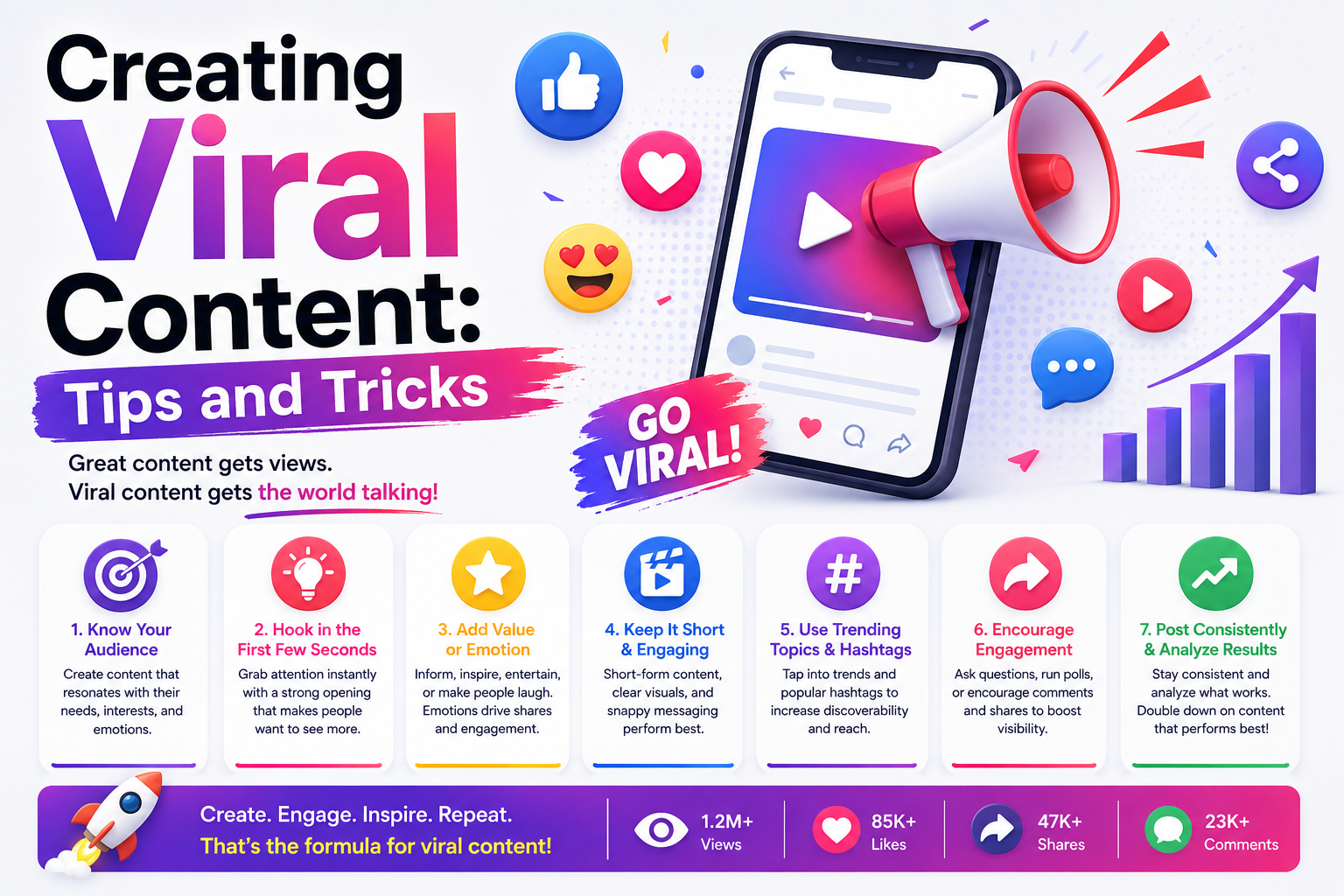
A social media post that spreads across platforms. A video that generates millions of views. A campaign that people voluntarily share with friends, colleagues, and communities. Viral content has become one of the most powerful tools in modern digital marketing because it can dramatically increase visibility without requiring a massive advertising budget.
However, many businesses mistakenly believe that viral success is based purely on luck. While timing and trends certainly play a role, the reality is that most successful viral campaigns are built on strategy, audience understanding, creativity, and data-driven execution.
Today, startups, SMEs, enterprises, and growing brands are investing heavily in content marketing because consumers spend more time online than ever before. According to multiple industry studies, social media users spend over two hours per day on social platforms, creating endless opportunities for businesses to connect with audiences through engaging content.
The challenge is not creating more content—it is creating content that people genuinely want to watch, share, and discuss.
In this guide, we will explore practical tips and proven techniques that can help businesses increase their chances of creating viral content while building long-term brand value.
What Makes Content Go Viral?
Before discussing tactics, it is important to understand why some content spreads rapidly while other content gets ignored.
Viral content triggers an emotional response strong enough that users feel compelled to share it. People share content because it entertains them, teaches them something useful, inspires them, surprises them, or helps them express their identity.
When a piece of content creates an emotional connection, engagement naturally increases. Higher engagement signals social media algorithms to distribute the content to larger audiences, creating a snowball effect.
The most successful viral campaigns often combine multiple elements including relevance, timing, storytelling, and audience participation.
For businesses, understanding these factors is the foundation of an effective viral content strategy.
Understand Your Audience Before Creating Content
One of the biggest mistakes brands make is trying to create content for everyone.
Viral content is rarely designed for a broad audience from the beginning. Instead, it often resonates deeply with a specific group of people who then help amplify it to larger audiences.
Business leaders should invest time in understanding:
- Audience interests
- Online behavior
- Content consumption habits
- Pain points and challenges
- Preferred social platforms
For example, a technology startup targeting CTOs will require a completely different content strategy than an e-commerce brand targeting Gen Z consumers.
The better you understand your audience, the easier it becomes to create content that feels relevant and shareable.
Successful brands spend considerable time analyzing customer data, social media insights, website analytics, and user feedback before developing content campaigns.
Focus on Emotion, Not Promotion
Many companies create content that focuses entirely on selling products.
Unfortunately, promotional content rarely becomes viral.
People do not share advertisements. They share experiences, emotions, and stories.
Research consistently shows that emotionally driven content generates significantly higher engagement than purely informational content. Whether the emotion is excitement, inspiration, curiosity, humor, or surprise, emotional triggers encourage users to interact and share.
Consider how brands like Nike create campaigns. Their content often focuses on human achievement, determination, and inspiration rather than simply showcasing products. The emotional narrative becomes the driving force behind audience engagement.
Businesses should ask themselves one important question before publishing content:
“What feeling do we want our audience to experience?”
The answer often determines whether content remains unnoticed or gains momentum.
Tell Stories That People Remember
Storytelling remains one of the most effective methods for creating highly engaging content.
Humans naturally connect with stories because stories provide context, emotion, and meaning.
A compelling story can transform an ordinary product announcement into a memorable piece of content. Instead of simply discussing product features, brands can highlight customer success stories, company journeys, employee experiences, or industry challenges.
For example, many successful startups have gained significant online attention by sharing authentic stories about how they overcame obstacles during their growth journey.
Stories create relatability, and relatability increases sharing behavior.
When audiences see themselves reflected in your content, they are far more likely to engage with it.
Leverage Trends Without Losing Brand Identity
Trending topics can dramatically increase visibility when used strategically.
Social media platforms reward content that aligns with current conversations, making trends a valuable opportunity for brands seeking greater reach.
However, blindly following every trend can damage credibility.
The key is finding trends that align naturally with your business, audience, and industry.
A cybersecurity company, for example, may leverage discussions about digital privacy. A software company may create content around emerging AI developments. A retail brand may participate in seasonal consumer trends.
The most effective brands adapt trends to fit their own voice rather than copying what everyone else is doing.
This approach helps maintain authenticity while benefiting from increased visibility.
Create Strong Hooks Within the First Few Seconds
Attention spans continue to shrink across digital platforms.
Users often decide within seconds whether they will continue consuming content or scroll past it.
This means the beginning of your content is often more important than the rest.
Some effective hook strategies include:
- Asking a surprising question
- Presenting a shocking statistic
- Challenging common assumptions
- Revealing an unexpected outcome
- Highlighting a major problem
For example, instead of starting a video with a lengthy introduction, a business could begin with:
“Most companies waste thousands of dollars on digital marketing without realizing it.”
Such openings immediately create curiosity and encourage viewers to continue watching.
A strong hook significantly increases retention rates, which can improve algorithm performance and reach.
Prioritize High-Quality Visual Content
Visual content dominates today’s digital landscape.
Whether on LinkedIn, Instagram, YouTube, TikTok, or Facebook, visually appealing content consistently outperforms text-only formats.
Businesses aiming for viral success should focus on creating:
- Professional videos
- Eye-catching graphics
- Short-form content
- Engaging animations
- High-quality images
Video content, in particular, continues to experience exceptional growth. Industry reports indicate that short-form videos generate some of the highest engagement rates across social platforms.
Investing in quality production does not necessarily mean spending huge amounts of money. Clear visuals, strong messaging, and professional editing often matter more than expensive equipment.
Encourage Audience Participation
Content becomes significantly more shareable when audiences feel involved.
Interactive content creates engagement opportunities that extend beyond passive viewing.
When users actively participate, they become part of the content experience.
Audience participation can include polls, challenges, user-generated content campaigns, contests, community discussions, and interactive storytelling.
A great example is when brands encourage customers to share experiences using branded hashtags. This approach generates organic visibility while building stronger community engagement.
The more people participate, the greater the content’s potential reach.
Use Data to Improve Content Performance
Virality should not be viewed purely as a creative exercise.
The most successful organizations combine creativity with analytics.
Every campaign provides valuable insights into audience preferences and behavior patterns.
Businesses should regularly analyze metrics such as engagement rates, watch time, shares, click-through rates, comments, and audience retention.
These insights help identify:
- Which topics perform best
- What content formats generate engagement
- When audiences are most active
- Which platforms deliver the highest reach
Data-driven content strategies consistently outperform strategies based solely on assumptions.
Over time, these insights increase the probability of creating highly successful campaigns.
Optimize Content for Each Platform
A common mistake is publishing identical content across every platform.
Each social network has different user behaviors, algorithms, and content expectations.
LinkedIn audiences often prefer professional insights and industry expertise. Instagram audiences engage heavily with visual storytelling. TikTok users expect fast-paced, entertaining content. YouTube audiences frequently seek educational or long-form content.
Instead of copying content across channels, businesses should adapt messaging and format to match platform-specific preferences.
This approach improves engagement while maximizing content performance.
Consistency Matters More Than One Viral Post
Many organizations focus exclusively on achieving a viral moment.
While viral success can create significant exposure, sustainable growth comes from consistency.
A single viral post may generate temporary visibility. Consistent content creation builds authority, trust, and long-term audience relationships.
The strongest brands publish regularly, refine their strategies continuously, and learn from both successes and failures.
Over time, consistent execution creates multiple opportunities for content to gain traction.
Rather than chasing virality alone, businesses should focus on creating valuable content that delivers meaningful results for audiences.
Common Mistakes That Prevent Content From Going Viral
Even excellent content can underperform when businesses make avoidable mistakes.
Some of the most common issues include:
- Prioritizing sales messages over audience value
- Ignoring audience insights and analytics
- Publishing inconsistent content
- Following irrelevant trends
- Failing to optimize content for mobile users
Avoiding these mistakes can significantly improve content performance and audience engagement.
Small improvements in strategy often produce substantial increases in reach and visibility.
The Future of Viral Content
The digital content landscape continues to evolve rapidly.
Artificial intelligence, personalization technologies, interactive experiences, and short-form video formats are reshaping how users consume content.
At the same time, audiences increasingly value authenticity and transparency. Highly polished corporate messaging is gradually being replaced by relatable, human-centered communication.
Businesses that combine technology, creativity, and genuine audience connection will be best positioned to create viral content in the years ahead.
The future belongs to brands that understand their audiences and consistently deliver meaningful experiences rather than simply pursuing attention.
Conclusion
Creating viral content is not about luck or random success.
It is the result of understanding your audience, telling compelling stories, triggering emotional engagement, leveraging trends strategically, and continuously improving through data analysis.
While no formula can guarantee virality, businesses that focus on audience value, authenticity, and consistent execution dramatically improve their chances of creating content that reaches wider audiences and generates lasting impact.
Whether you are a startup looking to build awareness, an SME aiming to increase engagement, or an enterprise seeking stronger digital visibility, the principles remain the same: create content people care about, make it easy to share, and continuously optimize your approach.
The brands that master these fundamentals will not only create viral moments but also build sustainable growth in an increasingly competitive digital world.
Frequently Asked Questions (FAQs)
What is viral content?
Viral content refers to content that spreads rapidly across digital platforms through shares, engagement, and organic audience participation. It often reaches significantly larger audiences than standard content.
Can businesses consistently create viral content?
No business can guarantee virality. However, organizations can significantly improve their chances by understanding audience behavior, creating engaging content, and using data-driven strategies.
Which content format has the highest viral potential?
Short-form videos currently have some of the strongest viral potential due to high engagement rates and algorithm support across major social media platforms.
How important are social media trends for viral content?
Trends can increase visibility, but they should align with your brand identity and audience interests. Relevance is more important than simply following every trend.
Should businesses focus only on viral content?
No. While viral content can generate rapid exposure, businesses should prioritize consistent, high-quality content that builds trust, authority, and long-term customer relationships.
Ready to Build a High-Impact Content Strategy?
Creating viral content requires more than creativity—it demands strategic planning, audience insights, technology expertise, and continuous optimization. Partnering with the right digital marketing and technology team can help your business develop data-driven content strategies that increase engagement, strengthen brand visibility, and accelerate growth.
Whether you’re a startup, SME, or enterprise, choosing an experienced technology and digital transformation partner can help you turn content into measurable business results and long-term competitive advantage.