


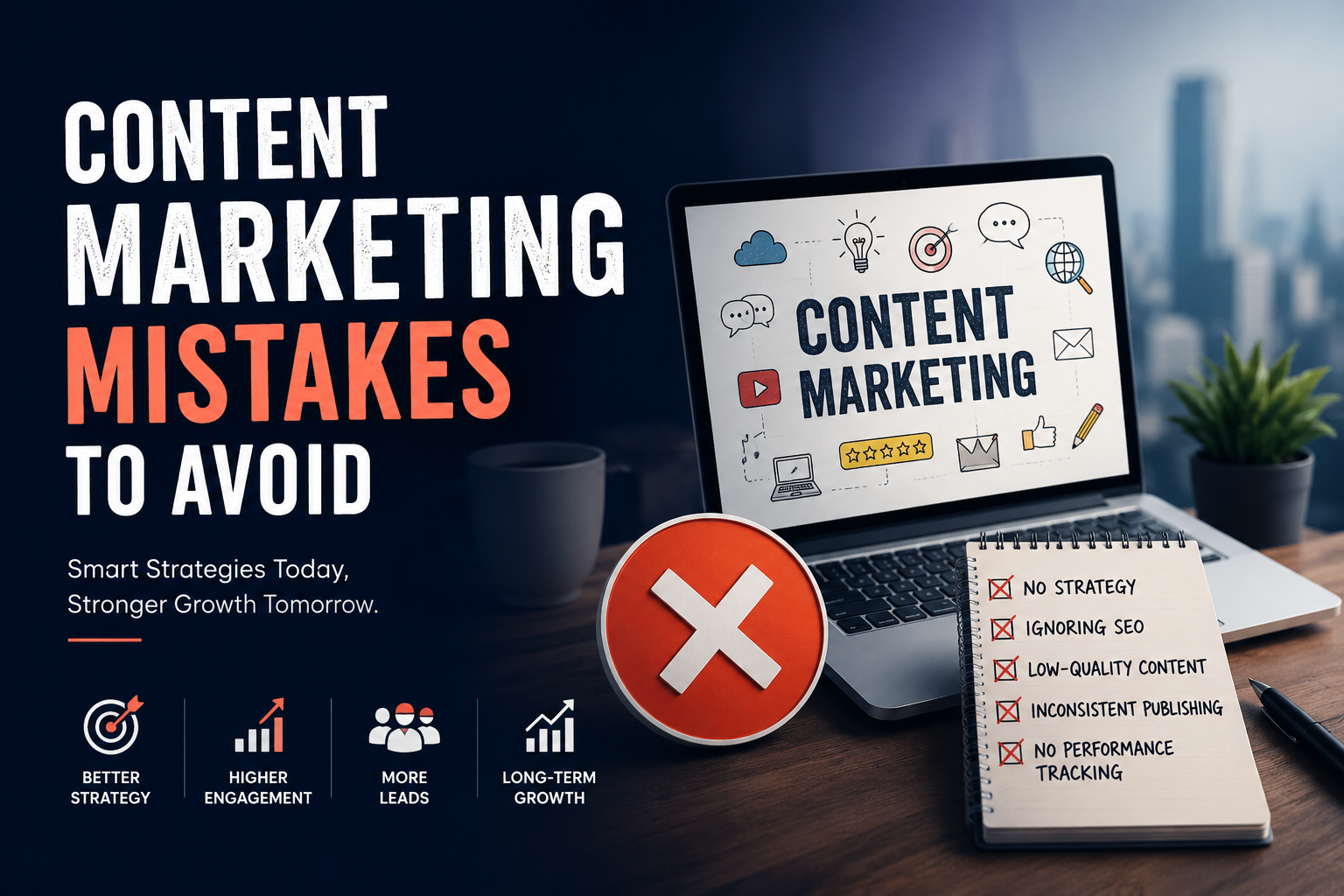
Content marketing has become one of the most powerful tools for business growth. From startups trying to build brand awareness to enterprises driving digital transformation, high-quality content can influence buying decisions, improve SEO rankings, and generate long-term customer trust.
But there’s a problem.
Many businesses invest heavily in content marketing without seeing real results. They publish blog posts regularly, post on social media, or send newsletters — yet traffic remains low, leads don’t convert, and engagement slowly drops.
The reason is simple: content marketing is easy to start but difficult to execute correctly.
According to the Content Marketing Institute, businesses that follow a documented content strategy consistently perform better than those publishing content randomly. Meanwhile, Google’s evolving search algorithms now prioritize experience, expertise, trust, and user value more than ever before.
This means poor content strategies are no longer just ineffective — they can actually damage your online visibility.
In this article, we’ll explore the most common content marketing mistakes businesses make and how to avoid them. Whether you’re a founder, CTO, marketer, or business owner, these insights will help you build a stronger and more effective content strategy.
Why Content Marketing Matters More Than Ever
Before discussing the mistakes, it’s important to understand why content marketing continues to dominate digital growth strategies.
Modern buyers rarely make instant decisions. They research products, compare services, read reviews, and consume educational content before contacting a business.
That’s where content marketing works best.
Good content helps businesses:
- Build trust and authority
- Improve search engine visibility
- Generate qualified leads
- Educate potential customers
- Increase brand awareness
- Support long-term SEO growth
- Improve conversion rates
Companies that consistently publish valuable content often experience compounding growth over time. A single well-optimized blog can generate traffic and leads for years.
However, this only happens when businesses avoid the common mistakes that reduce content performance.
1. Creating Content Without a Strategy
One of the biggest mistakes businesses make is publishing content without a clear strategy.
Many companies write blogs simply because competitors are doing it. Others post content inconsistently with no clear goals, audience targeting, or SEO direction.
This approach usually leads to:
- Low traffic
- Poor engagement
- Weak brand positioning
- Inconsistent messaging
- Wasted marketing budgets
What a Strong Content Strategy Should Include
A successful content strategy should define:
Business Goals
Are you trying to:
- Generate leads?
- Improve SEO?
- Build authority?
- Increase product awareness?
- Support customer retention?
Your goals determine the type of content you create.
Target Audience
Understand:
- Customer pain points
- Industry challenges
- Search intent
- Buyer journey stages
Content Channels
Decide where content will perform best:
- Blogs
- Email marketing
- YouTube
- Case studies
- Whitepapers
SEO Strategy
Every piece of content should support broader SEO goals with:
- Keyword targeting
- Internal linking
- Search intent optimization
- Topic clusters
Businesses that document their content strategy often see significantly higher ROI compared to those working without a structured plan.
2. Ignoring Search Intent
Ranking on Google is no longer just about adding keywords into blog posts.
Search engines now prioritize user intent.
If your content doesn’t answer what users actually want, rankings and engagement will suffer.
Understanding Search Intent
There are four primary types of search intent:
Informational
Users want answers or education.
Example:
“How does cloud migration work?”
Navigational
Users are searching for a specific brand or website.
Transactional
Users are ready to buy.
Example:
“Best CRM software for startups”
Commercial Investigation
Users are comparing solutions before making decisions.
Businesses often create content that targets keywords but ignores the actual intent behind them.
For example, writing a sales-heavy article for an informational query usually increases bounce rates because users expected educational content instead of promotions.
How to Avoid This Mistake
Before writing content:
- Analyze top-ranking Google results
- Understand what users expect
- Match content format to search intent
- Provide genuine value first
When content aligns with user intent, SEO performance improves naturally.
3. Publishing Low-Quality or Generic Content
The internet is flooded with repetitive articles.
Generic content no longer works.
Modern readers can quickly identify when content lacks expertise or originality. Google can too.
Signs of Weak Content
- Surface-level explanations
- Rewritten competitor content
- No unique insights
- Poor formatting
- Lack of examples
- No actionable takeaways
Businesses often focus on quantity over quality, believing more blog posts automatically lead to better SEO.
That strategy is outdated.
Today, one well-researched article can outperform dozens of low-quality posts.
Real-World Example
A SaaS company publishing detailed industry case studies often outperforms competitors producing short AI-generated summaries with no expertise.
Why?
Because buyers trust content that demonstrates real experience and practical value.
How to Improve Content Quality
Create content that includes:
- Original insights
- Industry expertise
- Real examples
- Data-backed points
- Actionable solutions
- Clear structure
Premium content builds authority over time.
4. Overlooking SEO Fundamentals
Even excellent content can fail if SEO basics are ignored.
Many businesses publish valuable content that never ranks because technical and on-page SEO elements are missing.
Common SEO Mistakes
Poor Keyword Research
Targeting keywords with:
- Extremely high competition
- No search volume
- Wrong audience intent
Missing Internal Links
Internal linking helps:
- Improve website structure
- Increase page authority
- Keep visitors engaged longer
Weak Meta Titles and Descriptions
These directly impact click-through rates.
Slow Website Speed
A slow-loading website negatively affects:
- User experience
- SEO rankings
- Conversions
Ignoring Mobile Optimization
Most users now browse on mobile devices.
Google prioritizes mobile-friendly experiences.
SEO Is Not Just About Rankings
Strong SEO improves:
- Visibility
- Credibility
- Organic traffic
- Lead generation
- Long-term marketing ROI
Businesses should treat SEO as an essential foundation, not an afterthought.
5. Creating Content Only for Search Engines
Some companies become overly focused on rankings and forget about human readers.
The result?
Keyword-stuffed, robotic content that feels unnatural and difficult to read.
This creates poor user experiences and weak engagement.
Signs of Over-Optimized Content
- Repeating keywords excessively
- Unnatural sentences
- Overuse of exact-match phrases
- Writing for algorithms instead of people
Google’s algorithms have become much smarter at identifying valuable, human-centered content.
The Better Approach
Write for people first.
Then optimize strategically.
Good content should:
- Sound natural
- Be easy to read
- Solve real problems
- Provide useful information
SEO works best when combined with genuine user value.
6. Inconsistent Publishing
Consistency is critical in content marketing.
Many businesses start strong but stop publishing regularly after a few months.
This weakens momentum and reduces long-term growth opportunities.
Why Consistency Matters
Consistent publishing:
- Improves search visibility
- Builds audience trust
- Increases indexing opportunities
- Supports brand authority
Content marketing is a long-term investment, not a quick-win strategy.
How to Maintain Consistency
Create:
- Editorial calendars
- Monthly content plans
- Topic clusters
- Publishing workflows
Even publishing two high-quality articles per month consistently is better than posting randomly.
7. Ignoring Content Distribution
Publishing content alone is not enough.
One major mistake businesses make is assuming people will automatically find their content.
Without distribution, even excellent content can remain invisible.
Effective Content Distribution Channels
Especially valuable for B2B businesses and enterprise audiences.
Email Marketing
Great for nurturing existing leads.
Social Media
Helps increase reach and engagement.
Industry Communities
Forums and niche communities can drive targeted traffic.
Repurposing Content
Turn blogs into:
- Videos
- Infographics
- Carousels
- Podcasts
- LinkedIn posts
Successful businesses spend almost as much time distributing content as creating it.
8. Not Measuring Performance
Another major mistake is creating content without analyzing results.
If businesses don’t track performance, they cannot improve strategy effectively.
Key Metrics to Track
Organic Traffic
Shows SEO growth over time.
Bounce Rate
Indicates whether content matches user expectations.
Conversion Rate
Measures lead generation effectiveness.
Engagement Metrics
Includes:
- Time on page
- Shares
- Comments
- Scroll depth
Keyword Rankings
Helps evaluate SEO visibility.
Data Helps Improve Content Strategy
Analytics reveal:
- Which topics perform best
- What audiences engage with
- Where users drop off
- Which channels drive conversions
Businesses using data-driven content strategies usually achieve better long-term growth.
9. Failing to Update Old Content
Many companies focus only on creating new content while ignoring existing articles.
This is a missed opportunity.
Refreshing old content can significantly improve rankings and traffic.
Why Content Updates Matter
Google prefers fresh, relevant information.
Updating old articles helps:
- Improve accuracy
- Maintain rankings
- Add new insights
- Increase engagement
What to Update
- Statistics
- Examples
- SEO keywords
- Internal links
- Outdated information
- Visuals
Some businesses achieve major SEO growth simply by optimizing existing content instead of constantly publishing new articles.
10. Neglecting Brand Voice and Authenticity
Modern audiences value authenticity.
Businesses that sound overly corporate or generic often struggle to build trust.
Why Brand Voice Matters
A consistent voice helps businesses:
- Build recognition
- Improve trust
- Strengthen customer relationships
- Differentiate from competitors
Example
A startup speaking clearly and honestly about industry challenges often creates stronger engagement than a company using overly formal marketing jargon.
People connect with brands that feel human.
11. Focusing Only on Selling
One of the fastest ways to lose audience trust is constantly pushing sales messages.
Content marketing should educate first.
If every blog post sounds like an advertisement, readers will disengage.
The 80/20 Rule
A strong approach is:
- 80% educational and valuable content
- 20% promotional content
Helpful content builds trust, and trust drives conversions naturally.
12. Ignoring the Customer Journey
Different audiences need different types of content depending on where they are in the buying process.
Many businesses create only top-of-funnel awareness content but ignore decision-stage materials.
Content for Each Stage
Awareness Stage
- Blogs
- Educational guides
- Industry trends
Consideration Stage
- Comparison articles
- Case studies
- Webinars
Decision Stage
- Testimonials
- Product demos
- ROI-focused content
A balanced content strategy supports the full customer journey.
Future Trends in Content Marketing
Content marketing continues evolving rapidly.
Businesses should prepare for:
AI-Assisted Content Workflows
AI tools can improve efficiency, but human expertise remains essential.
Experience-Driven Content
Interactive and personalized content is growing.
Video-First Strategies
Short-form and educational video content continues expanding.
EEAT Optimization
Google increasingly values:
- Experience
- Expertise
- Authority
- Trustworthiness
Businesses focusing on genuine value will continue outperforming competitors relying on shortcuts.
How Businesses Can Build a Smarter Content Marketing Strategy
To succeed in modern content marketing, businesses should focus on:
- Strategic planning
- User intent
- SEO optimization
- Content quality
- Consistent publishing
- Analytics
- Authentic brand communication
Most importantly, content should always prioritize helping users solve real problems.
That’s what builds long-term trust and sustainable growth.
Conclusion
Content marketing remains one of the most powerful digital growth strategies available today. But success requires more than simply publishing articles or posting on social media.
Businesses that avoid common mistakes — like weak strategy, low-quality content, inconsistent publishing, and poor SEO practices — are far more likely to achieve meaningful results.
The companies winning today are the ones creating valuable, human-centered content that educates, engages, and builds trust over time.
Whether you’re a startup building visibility or an enterprise driving digital transformation, investing in smarter content marketing can deliver long-term competitive advantages.
The key is consistency, quality, and strategic execution.
Frequently Asked Questions (FAQ)
What is the biggest content marketing mistake businesses make?
The biggest mistake is creating content without a clear strategy. Businesses often publish random content without understanding audience intent, SEO goals, or conversion objectives.
How often should businesses publish content?
Consistency matters more than frequency. Publishing high-quality content regularly — even twice a month — is more effective than posting inconsistent low-value articles.
Why is SEO important in content marketing?
SEO helps content become discoverable through search engines. Without SEO optimization, even excellent content may struggle to reach the right audience.
Can AI-generated content hurt SEO?
AI-generated content is not automatically harmful, but low-quality or generic AI content can negatively impact rankings and user trust. Human expertise and editing remain essential.
How long does content marketing take to show results?
Content marketing is a long-term strategy. Businesses typically begin seeing meaningful SEO and traffic improvements within 3 to 6 months, depending on competition and consistency.
Ready to Improve Your Content Marketing Strategy?
The right content strategy can help your business generate leads, improve search visibility, strengthen brand authority, and support long-term digital growth.
Whether you’re a startup, SME, or enterprise, partnering with the right technology and digital marketing experts can make a significant difference in your success.
Invest in content that delivers real value — not just rankings.