


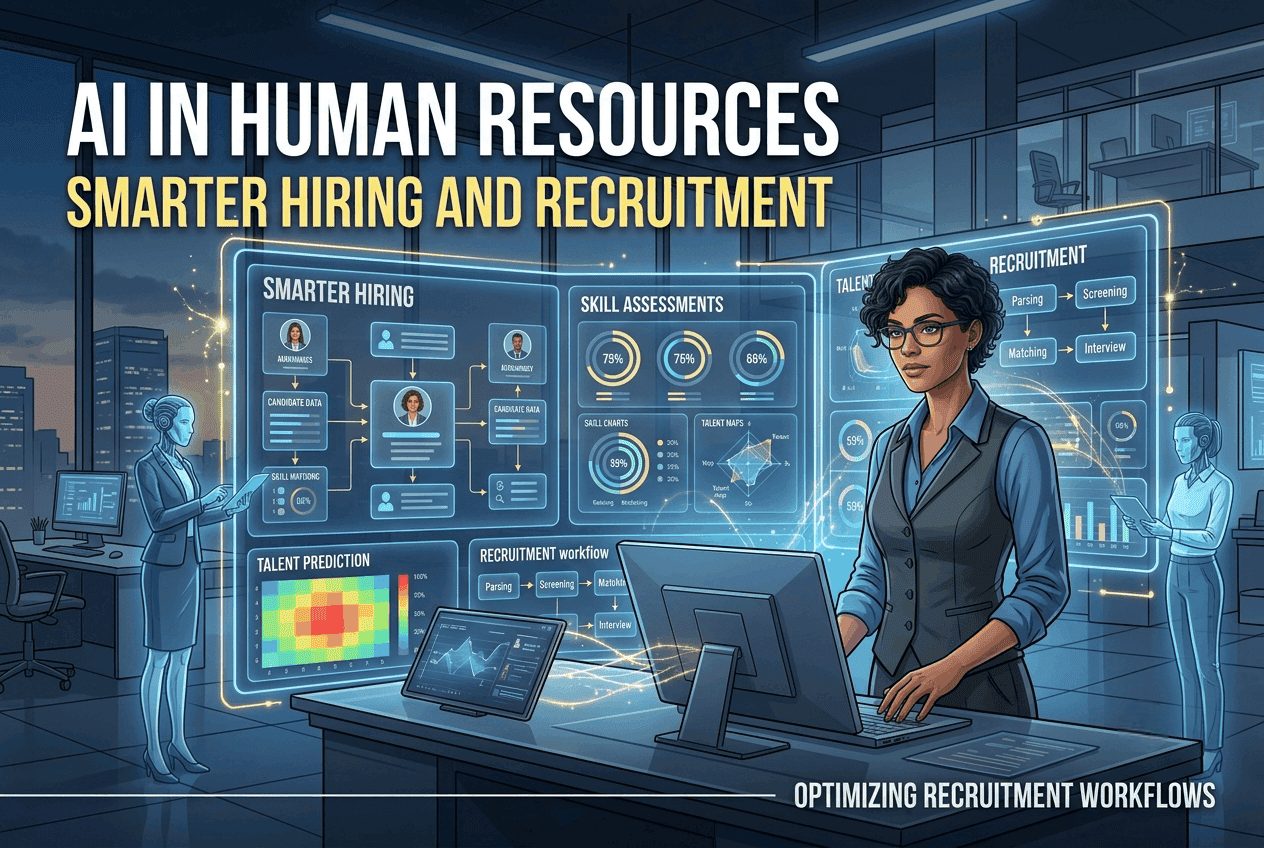
Recruitment has always been one of the most important responsibilities for any business. Finding the right employees takes time, effort, and careful decision-making. Companies often receive hundreds of applications for a single job opening, making it difficult for hiring teams to review every resume manually. As businesses continue to grow and competition for skilled talent increases, organizations are looking for smarter ways to improve the hiring process. This is where Artificial Intelligence (AI) is making a significant difference.
AI in Human Resources is changing how companies attract, evaluate, and hire candidates. Instead of replacing HR professionals, AI works as a powerful assistant that automates repetitive tasks, analyzes large amounts of hiring data, and helps recruiters make faster and more informed decisions. From screening resumes to scheduling interviews and communicating with applicants, AI simplifies many recruitment activities while improving overall efficiency.
Today, businesses of all sizes are investing in AI-powered recruitment tools to reduce hiring time, improve candidate quality, and enhance the overall recruitment experience. Whether it is a startup hiring its first employees or a multinational company recruiting thousands of professionals each year, AI has become a valuable part of modern human resource management. Understanding how AI works in recruitment helps business leaders make better hiring decisions while staying competitive in today’s fast-changing job market.
Understanding AI in Human Resources
Artificial Intelligence in Human Resources refers to the use of intelligent software and machine learning technologies to support various HR activities, especially recruitment and talent acquisition. These systems analyze data, recognize patterns, and perform repetitive tasks that traditionally required significant manual effort. Instead of spending hours reviewing applications or arranging interviews, HR professionals can focus more on building relationships with candidates and making strategic hiring decisions.
Modern AI recruitment platforms use technologies such as natural language processing, predictive analytics, and machine learning to understand resumes, compare candidate qualifications with job descriptions, and rank applicants based on their suitability. These technologies continue learning from previous hiring decisions, helping organizations improve recruitment accuracy over time. As more hiring data becomes available, AI systems become increasingly effective at identifying strong candidates.
AI also improves communication throughout the hiring process. Intelligent chatbots answer common candidate questions, provide updates on application status, and help schedule interviews without requiring constant human involvement. This creates a smoother experience for job seekers while reducing administrative work for HR teams.
The role of AI extends beyond recruitment. Human resource departments are also using AI for employee onboarding, workforce planning, performance analysis, learning recommendations, and employee engagement. However, recruitment remains one of the areas where AI delivers the fastest and most noticeable business benefits.
Why Businesses Are Adopting AI for Recruitment
Organizations face several hiring challenges, including talent shortages, increasing application volumes, long recruitment cycles, and rising hiring costs. Traditional recruitment methods often struggle to keep up with these demands, leading businesses to explore AI-powered solutions that improve both speed and accuracy.
One major advantage of AI is its ability to process thousands of resumes within minutes. Instead of manually reviewing every application, recruiters receive a shortlist of candidates whose skills and experience closely match the job requirements. This significantly reduces the time required to identify qualified applicants while maintaining consistency throughout the screening process.
Businesses also value AI because it helps improve the candidate experience. Faster communication, automated interview scheduling, and timely application updates create a more professional recruitment journey. Candidates appreciate transparency and quick responses, which can strengthen the employer’s reputation and increase the likelihood of attracting top talent.
Another important reason companies adopt AI is data-driven decision-making. Rather than relying solely on intuition, recruiters gain access to valuable hiring insights, recruitment analytics, and performance predictions. These insights help organizations continuously improve their hiring strategies and make more informed workforce planning decisions.
How AI Improves the Hiring Process
One of the biggest contributions of AI is streamlining every stage of recruitment. From posting job advertisements to selecting the final candidate, AI helps automate routine activities while providing recruiters with meaningful recommendations. This reduces delays and allows hiring managers to focus on evaluating candidates more effectively.
AI-powered applicant tracking systems automatically collect resumes from multiple job portals and organize candidate information in one central location. Recruiters can quickly search for candidates based on skills, certifications, education, experience, or industry knowledge without manually reviewing each application. This improves efficiency and reduces the risk of overlooking qualified applicants.
Interview scheduling has also become much easier through AI automation. Intelligent systems coordinate calendars, send invitations, provide reminders, and even reschedule interviews when necessary. These small improvements eliminate many administrative tasks that traditionally consume HR professionals’ valuable time.
During interviews, some AI solutions analyze communication patterns, technical assessments, and skill-based evaluations to provide additional insights for recruiters. While human judgment remains essential for final hiring decisions, AI helps ensure evaluations are more consistent, objective, and supported by relevant data.
AI-Powered Resume Screening
Resume screening is one of the most time-consuming parts of recruitment. A single job posting may receive hundreds or even thousands of applications, making manual evaluation both slow and challenging. AI-powered resume screening allows recruiters to process these applications quickly while maintaining consistency across every candidate.
AI software scans resumes to identify qualifications, technical skills, work experience, certifications, educational background, and industry-specific keywords. It compares this information with the job description to determine how closely each applicant matches the required profile. Recruiters receive a ranked list of candidates, allowing them to prioritize interviews with the most suitable applicants.
Unlike manual screening, AI reduces the possibility of human oversight when dealing with large application volumes. Qualified candidates are less likely to be missed because of recruiter fatigue or time constraints. This helps organizations improve hiring quality while shortening recruitment timelines.
However, businesses must regularly review and update their AI screening criteria. If outdated hiring data or biased selection patterns are used for training AI systems, recruitment outcomes may become unfair. Responsible AI implementation requires ongoing monitoring, transparency, and human oversight to ensure equal opportunities for all applicants.
AI Chatbots in Recruitment
AI-powered chatbots have become an important part of modern recruitment because they provide instant communication between employers and job seekers. Candidates often have questions about job roles, company policies, application deadlines, or interview schedules. Instead of waiting for an HR representative to respond, AI chatbots can answer these questions immediately, creating a faster and more satisfying experience for applicants.
These virtual assistants are available around the clock, allowing candidates from different time zones to receive support whenever they need it. Whether someone is applying during the day or late at night, the chatbot can guide them through the application process, explain job requirements, and even recommend suitable positions based on their skills and experience. This level of accessibility improves candidate engagement and encourages more people to complete their applications.
AI chatbots also reduce the administrative workload for HR teams. Routine tasks such as collecting candidate information, confirming interview availability, sending reminders, and providing status updates are handled automatically. Recruiters can spend more time conducting interviews, evaluating talent, and building relationships with potential employees instead of answering repetitive questions.
Many organizations have found that chatbots improve employer branding as well. Candidates appreciate quick responses and transparent communication throughout the hiring journey. Even applicants who are not selected often leave with a positive impression because they received timely updates and professional support during the recruitment process.
AI for Candidate Matching
Finding the right candidate involves much more than matching keywords on a resume. AI-powered candidate matching systems evaluate multiple factors, including technical skills, previous work experience, educational qualifications, certifications, career progression, and even transferable skills. This allows recruiters to identify applicants who may be an excellent fit, even if their resumes are not identical to the job description.
Machine learning algorithms continuously improve by analyzing previous hiring decisions and employee performance data. Over time, the system learns which characteristics are associated with successful employees and uses that information to recommend stronger candidates for future openings. This creates a more accurate and efficient hiring process.
Candidate matching also helps businesses discover hidden talent. Some applicants may not include every keyword expected by recruiters but possess valuable experience that makes them highly suitable for the role. AI can recognize these relationships and bring qualified candidates to the attention of hiring managers, reducing the chances of overlooking talented professionals.
While AI provides valuable recommendations, final hiring decisions should always involve human judgment. Recruiters can evaluate cultural fit, communication style, leadership potential, and other qualities that technology alone cannot fully measure. Combining AI insights with professional HR expertise creates better hiring outcomes than relying on either approach independently.
Predictive Analytics in Recruitment
Predictive analytics is one of the most valuable applications of AI in Human Resources. Instead of only analyzing current applications, predictive models use historical recruitment data to forecast future hiring outcomes. These insights help organizations make proactive decisions and improve workforce planning before talent shortages become major business challenges.
For example, AI can estimate how long it may take to fill a particular position based on previous hiring campaigns, industry demand, and current labor market conditions. Recruiters can use this information to adjust hiring strategies, expand candidate sourcing efforts, or begin recruitment earlier for critical positions. Better planning reduces delays and supports business growth.
Predictive analytics can also identify candidates who are more likely to succeed within a company. By examining patterns from previous employees, AI may recognize qualities linked to high performance, long-term retention, or leadership potential. These insights support better hiring decisions while helping organizations reduce employee turnover.
Businesses also use predictive analytics to improve recruitment budgets and resource allocation. HR teams can determine which recruitment channels consistently attract high-quality candidates and invest more in those platforms. This results in better returns on recruitment spending while increasing overall hiring efficiency.
AI-Based Skill Assessments and Candidate Evaluation
Traditional recruitment often depends heavily on resumes and interviews, but these methods do not always provide a complete picture of a candidate’s abilities. AI-powered assessment platforms help employers evaluate practical skills through online tests, simulations, coding challenges, language assessments, and problem-solving exercises that reflect real workplace situations.
These intelligent assessment systems automatically score candidate responses using predefined evaluation criteria. Recruiters receive detailed reports showing strengths, weaknesses, technical knowledge, and overall suitability for the role. Automated scoring also reduces inconsistencies that may occur when different interviewers assess candidates using different standards.
Many organizations now use AI to personalize assessments based on job requirements. A software developer may receive coding challenges, while a sales professional might complete customer communication exercises. Tailoring evaluations to specific roles improves hiring accuracy and ensures candidates demonstrate relevant skills rather than simply answering general interview questions.
Despite these advantages, businesses should avoid depending entirely on automated assessments. Soft skills such as teamwork, emotional intelligence, creativity, adaptability, and leadership often require human interaction to evaluate properly. Combining AI assessments with structured interviews creates a more balanced recruitment process.
Benefits of AI in Human Resources
AI offers numerous benefits that extend beyond faster hiring. One of the most important advantages is improved efficiency. Automating repetitive recruitment tasks allows HR professionals to focus on strategic responsibilities such as employee engagement, workforce planning, leadership development, and organizational culture. This increases productivity across the entire HR department.
Another major benefit is reduced hiring costs. Faster recruitment cycles mean businesses spend less on lengthy job advertisements, repeated interviews, and extended vacancies. AI also minimizes manual administrative work, allowing HR teams to manage higher recruitment volumes without significantly increasing staffing costs.
AI contributes to better hiring quality by providing consistent and data-driven candidate evaluations. Instead of relying only on personal opinions, recruiters can use objective insights to identify applicants who best match business requirements. Better hiring decisions often lead to stronger employee performance, improved retention, and higher overall productivity.
The candidate experience also improves considerably with AI-powered recruitment. Faster responses, automated interview scheduling, personalized communication, and transparent application tracking create a positive impression of the company. In today’s competitive job market, providing an excellent recruitment experience can help organizations attract and retain top talent.
Real-World Applications of AI in Recruitment
Many well-known companies already use AI to strengthen their recruitment processes. Large organizations often receive thousands of job applications every month, making manual screening nearly impossible. AI helps these businesses identify qualified candidates quickly while maintaining consistent evaluation standards across multiple departments and locations.
Technology companies frequently use AI-powered coding assessments to evaluate software developers before interviews begin. Financial institutions use predictive analytics to identify professionals with strong long-term potential, while healthcare organizations apply AI to recruit skilled medical staff efficiently during periods of increased demand. Each industry adapts AI according to its own hiring challenges.
Small and medium-sized businesses are also benefiting from affordable AI recruitment platforms. Cloud-based hiring solutions allow growing companies to automate resume screening, schedule interviews, and communicate with candidates without investing in expensive enterprise software. This enables smaller businesses to compete more effectively when attracting skilled employees.
Recruitment agencies have also embraced AI to improve client services. By automatically matching candidates with multiple job openings and maintaining updated talent databases, agencies can place qualified professionals more quickly. Faster placements improve client satisfaction while increasing operational efficiency and revenue opportunities.
Challenges of Implementing AI in Human Resources
Although AI offers many advantages, implementing it successfully requires careful planning and responsible management. One of the biggest challenges is ensuring that AI systems are trained using high-quality and unbiased data. If the historical hiring data contains bias, the AI may unintentionally recommend candidates based on patterns that are unfair or outdated. Organizations must regularly monitor AI models to ensure hiring decisions remain ethical and inclusive.
Another challenge is maintaining the balance between automation and human involvement. AI can efficiently handle repetitive tasks, but recruitment is still a people-focused process. Building relationships with candidates, understanding career aspirations, evaluating cultural fit, and making final hiring decisions require human experience and emotional intelligence. Businesses should view AI as a support tool rather than a replacement for HR professionals.
Data privacy is another important consideration. Recruitment platforms collect sensitive information such as resumes, educational records, employment history, and contact details. Companies must ensure that candidate data is stored securely and managed according to privacy regulations. Strong cybersecurity practices and transparent data policies help build trust with applicants while protecting valuable business information.
Employee adoption can also be a challenge during AI implementation. Some HR professionals may worry that automation will reduce their role or change the way they work. Organizations should provide proper training, explain the benefits of AI, and encourage employees to see technology as a tool that improves productivity rather than replaces human expertise.
Key Factors for Successful AI Recruitment
Businesses that achieve the best results with AI recruitment usually follow a well-planned strategy. While every organization has unique hiring needs, several factors contribute to successful AI adoption:
- Clearly define recruitment goals before selecting AI tools.
- Use high-quality and regularly updated hiring data.
- Combine AI recommendations with human decision-making.
- Continuously monitor AI performance and improve recruitment processes.
- Maintain transparency, fairness, and compliance with data privacy regulations.
By focusing on these areas, organizations can maximize the value of AI while ensuring ethical and effective hiring practices.
Common Mistakes Businesses Should Avoid
Many organizations invest in AI with high expectations but fail to achieve the desired results because of avoidable mistakes. One common mistake is expecting AI to replace recruiters entirely. AI is designed to automate routine activities and provide useful insights, but successful recruitment still depends on experienced HR professionals who understand people, business needs, and workplace culture.
Another mistake is relying on outdated job descriptions or incomplete hiring data. AI systems can only produce reliable recommendations when they receive accurate and relevant information. Regularly reviewing job requirements and updating recruitment databases helps improve hiring accuracy and ensures better candidate matching.
Some companies also make the mistake of ignoring candidate experience. Automating every interaction without offering opportunities for human communication can make applicants feel disconnected from the organization. Businesses should maintain a balance between automation and personalized engagement throughout the recruitment journey.
Finally, failing to measure recruitment performance can limit long-term success. Organizations should track important metrics such as time-to-hire, quality of hire, candidate satisfaction, employee retention, and recruitment costs. These insights help businesses evaluate the effectiveness of AI and identify opportunities for continuous improvement.
The Future of AI in Human Resources
The future of AI in Human Resources is expected to be even more intelligent, personalized, and data-driven. As machine learning models continue to evolve, AI will provide deeper insights into workforce planning, employee development, and long-term talent management. Recruitment systems will become better at understanding skills, predicting career success, and identifying future leaders within organizations.
Generative AI is also beginning to transform recruitment by helping HR teams create job descriptions, write personalized candidate communications, prepare interview questions, and summarize interview feedback. These capabilities save time while maintaining consistency across the hiring process. Businesses that adopt these innovations responsibly will gain a competitive advantage in attracting skilled professionals.
Another important trend is the increased focus on skills-based hiring. Rather than relying only on degrees or previous job titles, AI will help organizations identify candidates based on practical abilities, certifications, and demonstrated competencies. This approach expands access to talent and creates more inclusive hiring opportunities.
In the coming years, AI will also support continuous employee growth after recruitment. Personalized learning recommendations, career development planning, employee engagement analysis, and workforce forecasting will become standard HR practices. Organizations that combine advanced AI technologies with experienced HR leadership will be better prepared to build resilient, productive, and future-ready workforces.
Conclusion
Artificial Intelligence is transforming Human Resources by making hiring and recruitment faster, smarter, and more efficient. From resume screening and candidate matching to predictive analytics and automated communication, AI helps organizations reduce recruitment costs while improving hiring quality. Rather than replacing HR professionals, AI empowers them to focus on strategic decision-making, employee relationships, and long-term workforce planning.
As technology continues to advance, businesses that embrace AI responsibly will be better positioned to attract top talent and remain competitive in an evolving job market. By combining intelligent automation with human expertise, organizations can create a recruitment process that is fair, efficient, and centered on finding the right people for the right roles. Investing in AI-powered HR solutions today is not only a step toward operational excellence but also a foundation for building stronger and more successful teams in the future.