


Introduction
Digital advertising has evolved far beyond simply displaying ads to large audiences. Today, successful businesses focus on reaching the most relevant prospects with highly personalized messaging. One of the most effective ways to achieve this is through geotargeting in PPC campaigns.
Whether you are a startup trying to generate local leads, an eCommerce business expanding into new markets, or an enterprise managing regional marketing budgets, geotargeting allows you to deliver advertisements based on a user’s location. Instead of spending money showing ads to people who are unlikely to become customers, businesses can focus their budget on locations where demand is strongest.
As competition in digital advertising continues to increase, businesses are looking for smarter ways to improve return on investment. Geotargeting has become a critical component of modern PPC strategy because it helps advertisers connect with customers more efficiently, increase conversions, and improve campaign performance.
In this guide, we will explore how geotargeting works, why it matters, best practices for implementation, and how businesses can leverage location-based advertising to gain a competitive advantage.
What Is Geotargeting in PPC Campaigns?
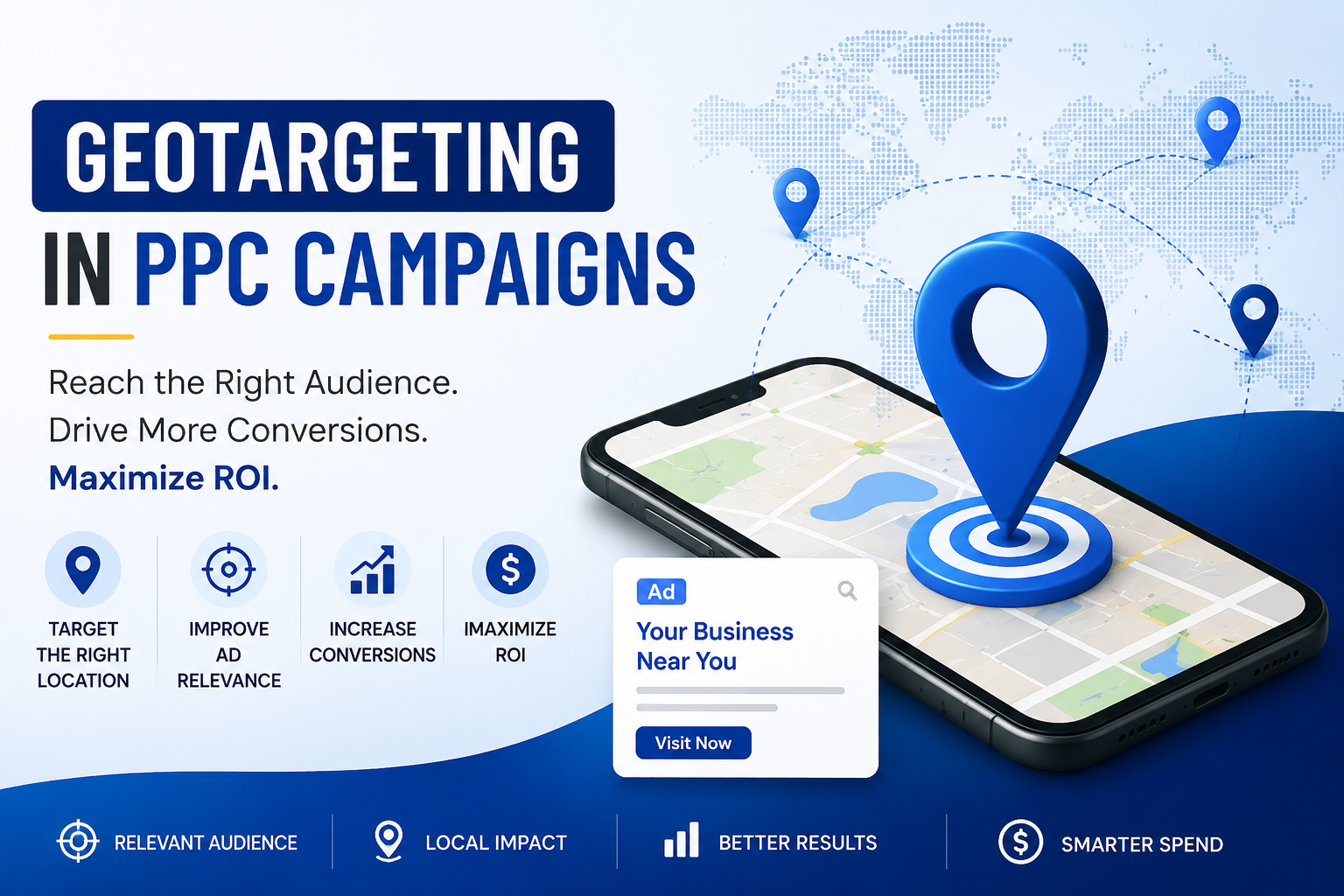
Geotargeting is a digital advertising strategy that allows businesses to display ads to users based on their geographic location. Locations can be defined broadly or narrowly depending on campaign goals.
Advertisers can target:
- Countries
- States or provinces
- Cities
- ZIP or postal codes
- Specific neighborhoods
- Custom geographic radiuses around a business location
Platforms such as Google Ads and Microsoft Advertising use location data gathered from IP addresses, device settings, GPS signals, and user behavior to determine where users are located.
For example, a law firm in Chicago may only want its PPC ads shown to users within the Chicago metropolitan area. Similarly, a restaurant chain may run different promotions for customers in different cities based on local preferences and market demand.
The primary goal is simple: show the right ad to the right person in the right place.
Why Geotargeting Matters More Than Ever
Consumer behavior has become increasingly location-driven. Mobile searches, local intent queries, and personalized shopping experiences are shaping how people interact with brands online.
Searches containing phrases such as “near me,” “open now,” and “best service in my area” continue to grow across industries. Customers expect businesses to understand their location and provide relevant solutions quickly.
Without geotargeting, advertisers risk spending budget on audiences that may never become customers. This not only increases costs but also reduces campaign effectiveness.
Businesses that implement strong location targeting strategies often experience:
Higher click-through rates
Improved conversion rates
Lower cost per acquisition
Better local brand visibility
More efficient advertising spend
As digital advertising costs continue rising, eliminating unnecessary impressions becomes increasingly valuable.
How Geotargeting Improves PPC Performance
Better Audience Relevance
Relevance is one of the biggest factors influencing PPC success.
When users see advertisements that align with their location, they are more likely to engage. A customer in Mumbai will respond differently to messaging than a customer in New York or London.
Location-specific advertisements create a more personalized experience that resonates with local audiences.
For example, a home renovation company operating only in Texas can focus ad spending exclusively on Texas residents rather than paying for clicks from users outside its service area.
This improves campaign efficiency while delivering stronger results.
Higher Conversion Rates
Many businesses discover that conversion rates vary significantly by location.
A software company may find that leads from certain metropolitan areas convert at much higher rates than leads from smaller markets. By analyzing geographic performance data, advertisers can allocate larger budgets to high-performing regions.
This approach allows businesses to maximize revenue while reducing wasted spending.
Instead of treating every market equally, geotargeting helps marketers prioritize locations that generate the best outcomes.
Reduced Advertising Waste
One of the most common PPC mistakes is targeting audiences that are outside a company’s operational reach.
Consider a local plumbing company serving only a 30-mile radius. Showing ads nationwide would generate irrelevant clicks and unnecessary expenses.
Geotargeting ensures that advertising budgets are focused exclusively on areas where customers can actually purchase products or services.
The result is better campaign efficiency and improved ROI.
Types of Geotargeting Strategies
Country-Level Targeting
Businesses expanding internationally often use country-level targeting to create separate campaigns for different markets.
This strategy allows advertisers to customize:
- Language
- Currency
- Offers
- Landing pages
- Ad copy
A SaaS company targeting customers in the United States, Canada, and Australia may create unique campaigns tailored to each market’s needs and preferences.
Regional and City Targeting
Many businesses find that performance varies between cities and regions.
For example, a real estate company may generate stronger results in urban areas compared to rural markets.
By targeting specific cities, advertisers can optimize messaging and budgets according to local demand patterns.
This level of precision often leads to stronger engagement and higher conversion rates.
Radius Targeting
Radius targeting allows businesses to display ads within a specified distance from a location.
Retail stores, restaurants, gyms, healthcare providers, and service businesses frequently use this approach.
For example, a fitness center might target users located within a 10-kilometer radius of its facility.
This ensures advertisements reach people who are realistically able to visit the location.
Location Exclusions
Just as important as targeting certain areas is excluding irrelevant locations.
A company may identify regions where shipping costs are too high or where products are unavailable.
Excluding those locations prevents wasted ad spend and improves campaign quality.
The Role of Localized Ad Copy
Successful geotargeting goes beyond selecting a location. Businesses should also adapt messaging to match local audiences.
Localized ad copy creates familiarity and relevance.
Instead of using generic messaging, advertisers can mention specific cities, neighborhoods, landmarks, or regional offers.
For example:
“Trusted Web Design Services in Austin”
performs better for Austin-based searches than:
“Professional Web Design Services”
because it immediately confirms local relevance.
This simple adjustment can significantly improve click-through rates and user engagement.
Geotargeting for Different Business Types
Startups
Startups often operate with limited marketing budgets.
Geotargeting helps emerging businesses focus resources on their most promising markets before expanding geographically.
Rather than competing nationally, startups can establish dominance within specific regions and gradually scale their advertising efforts.
Small and Medium-Sized Businesses
Local businesses benefit tremendously from location-based PPC advertising.
Restaurants, dental clinics, law firms, real estate agencies, repair companies, and retailers can generate highly qualified leads by targeting nearby customers actively searching for solutions.
This targeted approach often produces faster results than broad advertising campaigns.
Enterprises
Large organizations frequently manage multiple locations, territories, and regional markets.
Geotargeting allows enterprises to create customized campaigns for each market while maintaining centralized control.
Different locations can receive unique promotions, budgets, and messaging based on local business objectives.
This level of flexibility improves both performance and customer experience.
Combining Geotargeting with Other PPC Strategies
The most successful PPC campaigns rarely rely on a single targeting method.
Geotargeting becomes even more powerful when combined with additional audience signals.
Demographic Targeting
Businesses can narrow audiences based on:
- Age
- Gender
- Income level
- Household characteristics
Combining location and demographic targeting creates highly relevant audience segments.
Device Targeting
Mobile users often demonstrate stronger local intent than desktop users.
Businesses can increase bids for mobile traffic in key locations to capture customers actively searching nearby.
Audience Segmentation
Advertisers can combine geotargeting with customer behavior data, remarketing lists, and interest-based audiences.
This layered strategy creates more personalized campaigns and improves conversion opportunities.
Common Geotargeting Mistakes to Avoid
Many businesses implement geotargeting incorrectly, reducing campaign effectiveness.
One common mistake is targeting locations that are too broad. While broader reach may seem attractive, it often leads to wasted spending and lower relevance.
Another issue is failing to analyze geographic performance data. Markets change over time, and ongoing optimization is necessary for sustained success.
Businesses should also avoid using identical messaging across all locations. Local audiences respond better to personalized content that reflects their specific needs and environment.
Ignoring mobile behavior is another frequent oversight. Many location-based searches happen on smartphones, making mobile optimization essential.
Regular testing and refinement help ensure campaigns continue delivering strong results.
Measuring Geotargeting Success
Like any digital marketing strategy, geotargeting should be measured using meaningful performance indicators.
Important metrics include:
- Click-through rate (CTR)
- Conversion rate
- Cost per acquisition (CPA)
- Return on ad spend (ROAS)
- Lead quality
- Revenue by location
Geographic reporting within PPC platforms provides valuable insights into which markets are generating the strongest results.
Businesses can then adjust bids, budgets, and targeting settings based on actual performance data.
Data-driven optimization is what transforms geotargeting from a useful feature into a powerful growth strategy.
Future Trends in Geotargeting
Location-based advertising continues to evolve alongside advances in artificial intelligence, machine learning, and mobile technology.
Modern advertising platforms increasingly use predictive analytics to identify high-intent users based on location patterns and behavioral signals.
Businesses are also leveraging hyperlocal targeting strategies to engage customers within extremely precise geographic areas.
As personalization expectations continue to rise, location relevance will become even more important in digital marketing success.
Companies that embrace advanced geotargeting techniques today will be better positioned to compete in increasingly crowded advertising environments.
Conclusion
Geotargeting has become one of the most valuable tools in modern PPC advertising. By delivering ads based on geographic relevance, businesses can improve audience targeting, reduce wasted spending, increase conversions, and maximize marketing ROI.
Whether you operate a local business, a growing startup, or a global enterprise, location-based targeting provides the precision needed to compete effectively in today’s digital marketplace.
Successful PPC campaigns are no longer about reaching the largest audience. They are about reaching the right audience. Geotargeting makes that possible by ensuring your marketing message appears where it matters most.
Businesses that invest in strategic geotargeting can create more personalized customer experiences, achieve stronger advertising performance, and drive sustainable growth in both local and global markets.
Frequently Asked Questions (FAQs)
What is geotargeting in PPC advertising?
Geotargeting is a PPC advertising strategy that allows businesses to display ads based on a user’s geographic location, helping improve relevance and campaign performance.
Which platforms support geotargeting?
Major advertising platforms such as Google Ads, Microsoft Advertising, Meta Ads, and LinkedIn Ads offer location-based targeting capabilities.
Does geotargeting improve PPC ROI?
Yes. Geotargeting helps businesses focus budgets on relevant audiences, reducing wasted spend and increasing conversion opportunities, which often leads to better ROI.
What is radius targeting?
Radius targeting allows advertisers to show ads to users within a specified distance from a business location, making it ideal for local businesses and service providers.
Is geotargeting useful for eCommerce businesses?
Absolutely. eCommerce companies can use geotargeting to promote region-specific offers, optimize shipping strategies, and target high-performing geographic markets.
Choose the Right Digital Marketing and Technology Partner
A successful PPC strategy requires more than just setting up advertisements. It demands market research, audience analysis, location targeting expertise, landing page optimization, and continuous performance monitoring.
Whether you’re launching a new product, expanding into new markets, or looking to improve advertising ROI, partnering with an experienced digital marketing and technology team can help you build data-driven PPC campaigns that deliver measurable business results.
The right partner can transform your advertising investment into a sustainable growth engine, helping your business attract qualified leads, improve conversions, and stay ahead of competitors in an increasingly digital world.