


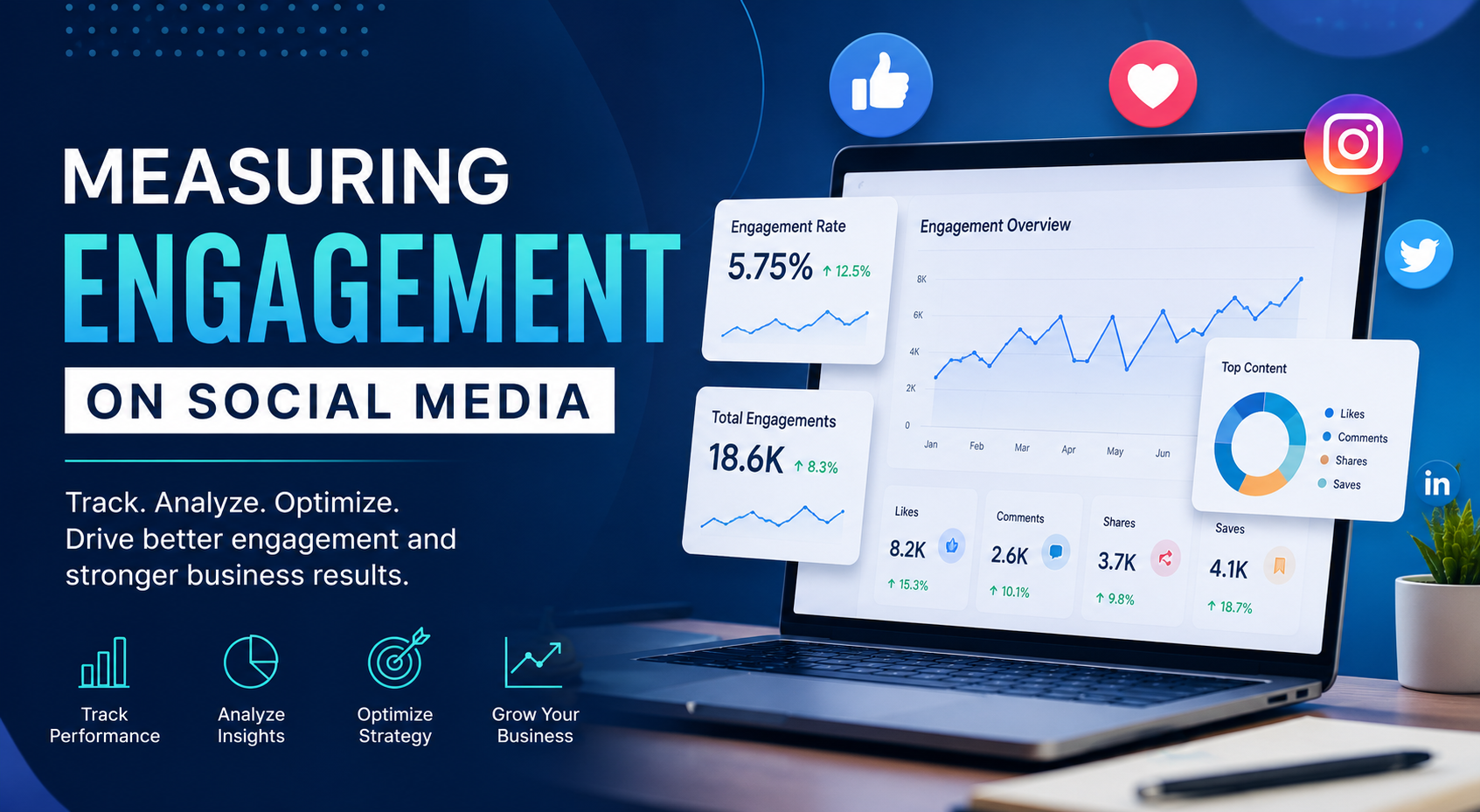
Social media has transformed the way businesses communicate with customers. What once started as a platform for sharing updates and photos has now become one of the most powerful channels for digital marketing, customer engagement, brand awareness, lead generation, and online reputation management. Today, businesses of all sizes use social media to build communities, connect with audiences, and drive long-term growth.
However, simply posting content on social platforms is no longer enough. Modern businesses need to understand how audiences react to their content, how users interact with their brand, and whether their social media strategy is creating meaningful results. This is why measuring engagement on social media has become one of the most important parts of digital marketing success.
Social media engagement provides valuable insights into customer behavior, audience preferences, and overall content performance. It helps businesses identify what works, what fails, and how to improve future campaigns. Whether a company wants to increase brand visibility, improve customer experience, or generate more leads, engagement metrics help measure the real impact of social media efforts.
For startups, SMEs, enterprises, founders, and organizations planning digital transformation, understanding engagement analytics is no longer optional. It is essential for staying competitive in a digital-first world.
What Does Social Media Engagement Mean?
Social media engagement refers to the interactions users have with a brand’s content across digital platforms. These interactions may include likes, comments, shares, saves, clicks, mentions, video views, story interactions, and direct messages.
Unlike follower counts or impressions, engagement reflects active participation. It shows whether audiences are genuinely interested in a brand’s content or simply scrolling past it. High engagement often indicates that content is relevant, valuable, entertaining, or emotionally connected to the audience.
For example, a business page with fewer followers but highly active comments and conversations may deliver stronger marketing value than an account with a large inactive audience. Engagement helps businesses understand audience quality rather than focusing only on audience size.
Platforms such as Instagram, LinkedIn, Facebook, and TikTok increasingly prioritize engagement-focused algorithms. Content that receives meaningful interactions is more likely to appear in feeds, recommendations, and discovery pages.
This means engagement not only reflects audience interest but also directly impacts organic reach and online visibility.
Why Measuring Engagement Is Important for Businesses
Many companies invest heavily in digital marketing campaigns, influencer partnerships, content production, and paid social advertising. Without engagement analysis, it becomes difficult to know whether these investments are actually producing results.
Measuring engagement helps businesses understand how customers respond to products, services, campaigns, and messaging. It provides data-driven insights that improve decision-making and marketing efficiency.
Businesses that actively measure engagement often gain a better understanding of:
- Audience behavior and preferences
- Content performance across platforms
- Brand perception and customer sentiment
- Customer loyalty and trust
- Campaign effectiveness and ROI
More importantly, engagement analytics help organizations optimize content strategies continuously.
For example, if educational videos generate more comments and shares than promotional graphics, businesses can shift their strategy toward value-driven content. Similarly, if audiences engage more during specific hours, brands can adjust publishing schedules for better visibility.
Companies that monitor engagement consistently are often able to improve customer relationships faster because they understand what their audiences actually care about.
The Difference Between Reach and Engagement
One of the most common mistakes businesses make is confusing reach with engagement.
Reach refers to the number of people who see content, while engagement measures how people interact with it.
A post may reach thousands of users but generate very little interaction. In contrast, another post may reach fewer users while creating meaningful discussions, shares, and clicks.
Engagement is usually a stronger indicator of content quality because it reflects audience participation and interest.
This is why marketers increasingly focus on engagement rate rather than vanity metrics like follower count alone.
The basic engagement rate formula is:
\text{Engagement Rate} = \frac{\text{Total Engagements}}{\text{Total Reach or Followers}} \times 100
A higher engagement rate generally means audiences find the content relevant and valuable.
Key Metrics Used to Measure Social Media Engagement
Businesses use multiple engagement metrics to evaluate social media performance. Different metrics become important depending on campaign goals, target audiences, and platform behavior.
Likes and Reactions
Likes and reactions provide quick feedback about how audiences respond to content. While they are considered basic engagement metrics, they still help businesses understand which content attracts immediate attention.
However, likes alone should not be treated as the primary measure of success because they require minimal effort from users.
Comments and Conversations
Comments are considered stronger engagement indicators because they involve active participation. When users take time to respond, ask questions, or share opinions, it often signals deeper interest in the content.
Businesses that generate meaningful discussions usually build stronger online communities and customer relationships over time.
For example, B2B companies sharing industry insights on LinkedIn often receive valuable professional discussions that increase credibility and visibility.
Shares and Reposts
Shares are one of the most valuable forms of engagement because users distribute content to their own audiences. This increases brand exposure organically and improves trust.
Content that educates, inspires, or entertains audiences is more likely to be shared across social platforms.
Businesses focused on brand awareness often prioritize shareable content because it extends reach without additional advertising costs.
Click-Through Rate
Click-through rate measures how many users click on links within social media posts.
This metric is especially important for companies focused on:
- Website traffic generation
- Lead generation campaigns
- Product sales
- Webinar registrations
- Software downloads
- Landing page conversions
A strong click-through rate often indicates that content and calls-to-action are aligned with audience interests.
Video Engagement Metrics
Video marketing has become one of the most important parts of modern social media strategy. Platforms increasingly prioritize short-form and long-form video content because it drives stronger engagement and longer user retention.
Businesses using video content should monitor:
- Watch time
- Audience retention
- Video completion rate
- Replay rate
- Shares and saves
For example, brands publishing educational tutorials on YouTube often analyze average watch duration to understand how effectively videos retain audience attention.
How Different Platforms Measure Engagement
Every social media platform uses different algorithms and engagement signals. Businesses should adapt strategies based on platform behavior rather than using identical content everywhere.
Engagement on Instagram
Instagram focuses heavily on visual storytelling and audience interaction. Reels, Stories, and carousel posts currently receive stronger algorithmic support because they encourage users to spend more time on the platform.
Businesses often track saves, shares, story replies, and video interactions to evaluate engagement quality.
Lifestyle brands, fashion companies, restaurants, fitness startups, and eCommerce businesses frequently use Instagram to build emotional connections with audiences through visual content.
Engagement on LinkedIn
LinkedIn engagement is more professional and conversation-driven.
Businesses on LinkedIn often focus on:
- Thought leadership content
- Industry insights
- Professional discussions
- Employee advocacy
- Business storytelling
B2B companies, SaaS brands, consulting firms, and enterprise technology providers often achieve stronger engagement through educational and expertise-driven content rather than aggressive promotion.
Engagement on TikTok
TikTok has rapidly become one of the highest-engagement social platforms because of its algorithm-driven content discovery system.
Unlike traditional platforms, TikTok allows even smaller brands to achieve massive visibility if content resonates with audiences.
Businesses that create authentic, relatable, and entertaining short-form videos often see strong engagement growth on TikTok.
Engagement on Facebook
Although newer platforms continue to grow, Facebook remains important for community engagement, local business marketing, and customer interaction.
Brands frequently use Facebook Groups, live videos, and community discussions to maintain customer relationships and increase visibility.
Local businesses especially benefit from Facebook engagement because reviews, recommendations, and local conversations strongly influence purchasing decisions.
The Role of AI in Social Media Engagement Analytics
Artificial intelligence is transforming social media analytics and customer engagement measurement.
AI-powered analytics tools can now help businesses:
- Predict audience behavior
- Identify trending content topics
- Recommend optimal posting schedules
- Analyze customer sentiment
- Detect engagement patterns
- Track competitor performance
Large enterprises increasingly rely on AI-driven marketing platforms to manage massive amounts of engagement data across multiple regions and customer segments.
AI also helps companies personalize content experiences, which is becoming increasingly important as users expect more relevant digital interactions.
Common Challenges Businesses Face While Measuring Engagement
Despite having access to advanced analytics tools, many businesses still struggle with engagement measurement.
One major challenge is focusing too heavily on vanity metrics such as follower counts. Large audiences do not automatically translate into strong customer relationships or business growth.
Another common issue is inconsistent reporting. Some businesses analyze engagement occasionally rather than tracking performance consistently over time. Without long-term analysis, it becomes difficult to identify trends and improve strategies effectively.
Businesses also struggle with platform fragmentation because each social platform provides different engagement metrics and reporting systems. This makes cross-platform analysis more complex.
Additionally, many organizations fail to align engagement metrics with business objectives. A campaign focused on brand awareness requires different engagement KPIs compared to a lead generation campaign.
How Businesses Can Improve Social Media Engagement
Improving engagement requires a combination of creativity, consistency, audience understanding, and data-driven optimization.
Businesses that focus on customer value rather than pure promotion usually achieve stronger long-term engagement.
Educational content, customer success stories, behind-the-scenes videos, industry insights, and interactive discussions often perform better because they create meaningful audience connections.
Video marketing continues to be one of the most effective engagement strategies across nearly all social platforms. Short-form videos especially help businesses increase reach, retention, and audience interaction.
Brands should also actively participate in conversations rather than only publishing content. Responding to comments, answering questions, and engaging with followers helps strengthen customer trust and community loyalty.
Consistency also plays a major role. Businesses that maintain regular posting schedules often build stronger audience relationships because users become familiar with the brand’s presence and voice.
Most importantly, companies should continuously analyze engagement data and refine strategies based on performance insights.
The Future of Social Media Engagement
The future of social media engagement will likely become even more personalized, interactive, and AI-driven.
As algorithms evolve, platforms will continue prioritizing authentic interactions and community-focused experiences over passive content consumption.
Interactive formats such as live streaming, AR experiences, short-form video, and creator collaborations are expected to play a larger role in engagement strategies.
Businesses that combine strong storytelling with analytics-driven decision-making will be better positioned for long-term digital success.
Companies investing in advanced engagement analytics today are already gaining competitive advantages through better customer understanding, stronger online communities, and more effective content strategies.
Conclusion
Measuring engagement on social media is one of the most important aspects of modern digital marketing. It helps businesses understand audience behavior, improve content performance, strengthen customer relationships, and maximize marketing ROI.
In today’s highly competitive digital landscape, engagement metrics provide deeper insights than vanity metrics alone. Businesses that consistently monitor likes, comments, shares, clicks, video performance, and audience interactions are better equipped to optimize campaigns and achieve sustainable growth.
Whether you are a startup building brand awareness, an SME improving customer engagement, or an enterprise managing global digital transformation, social media engagement analytics can help drive smarter marketing decisions and better business outcomes.
Choosing the right digital marketing and technology partner can further accelerate success by helping businesses implement advanced analytics, AI-powered insights, scalable content strategies, and performance-driven engagement campaigns.
Frequently Asked Questions
What is social media engagement?
Social media engagement refers to audience interactions with content, including likes, comments, shares, clicks, saves, and video views.
Why is engagement important on social media?
Engagement helps businesses measure audience interest, improve visibility, strengthen customer relationships, and evaluate content performance.
What is a good engagement rate?
A good engagement rate varies by industry and platform, but higher engagement rates generally indicate stronger audience connection and content relevance.
Which platform has the highest engagement?
Platforms like TikTok and Instagram often generate higher engagement due to short-form video content and algorithm-driven discovery systems.
How can businesses improve social media engagement?
Businesses can improve engagement by creating valuable content, using video marketing, participating in conversations, analyzing audience behavior, and maintaining consistent posting strategies.
Ready to Build Stronger Social Media Engagement?
Businesses that use engagement analytics effectively are better positioned to improve customer relationships, increase online visibility, and drive long-term digital growth.
Partnering with the right technology and digital marketing experts can help your business create data-driven social media strategies, improve audience engagement, and achieve measurable business success in an increasingly competitive digital world.