


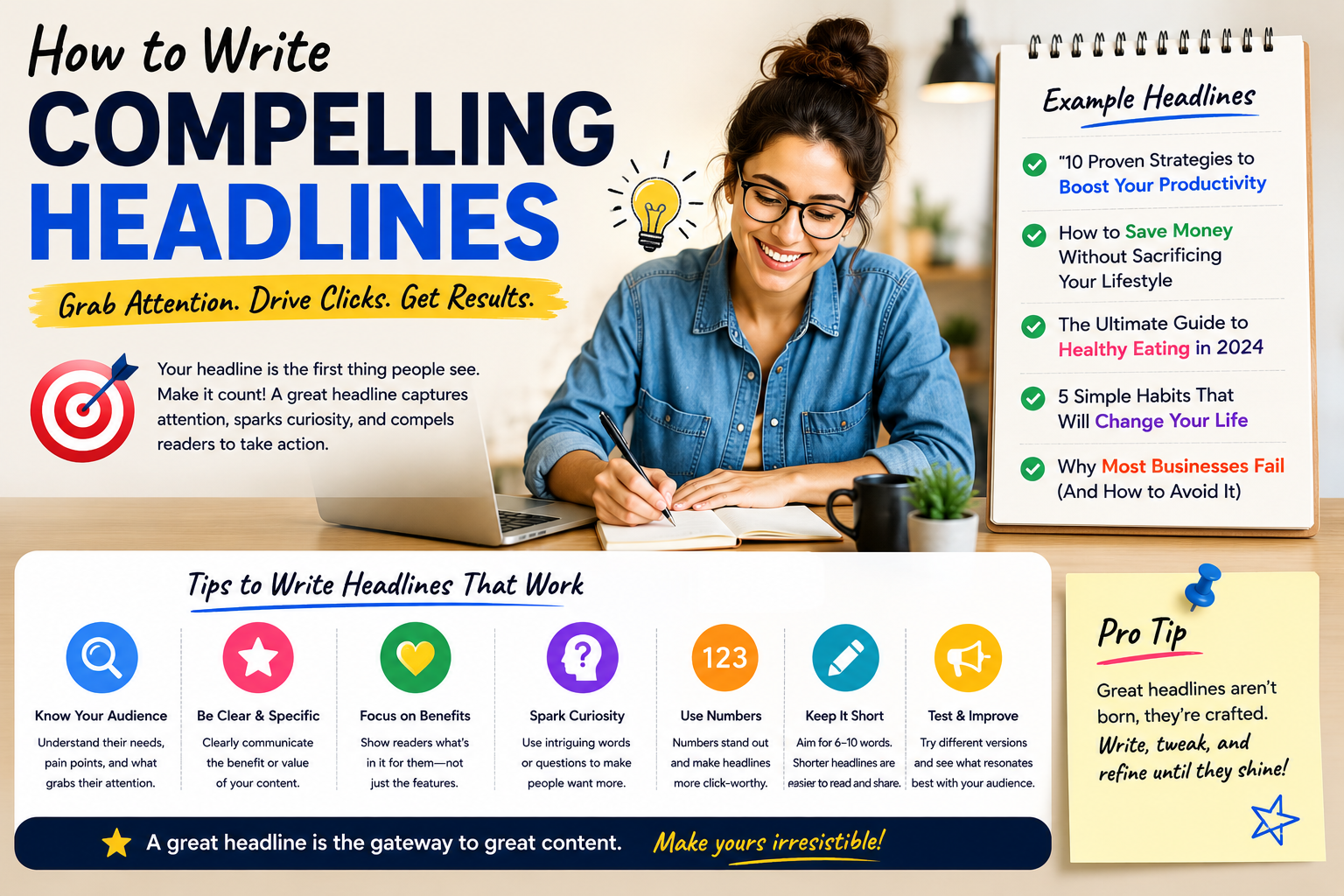
In today’s digital landscape, content competes for attention every second. Whether someone is scrolling through social media, browsing search engine results, reading emails, or exploring industry blogs, they make split-second decisions about what deserves their attention.
That decision is often based on one thing: the headline.
You can invest significant time and resources creating valuable content, but if the headline fails to capture interest, much of that effort goes unnoticed. A strong headline acts as the gateway to your content. It encourages people to click, read, engage, and ultimately take action.
For startups, SMEs, enterprises, and growing businesses, compelling headlines are more than a copywriting skill. They directly influence website traffic, lead generation, brand visibility, and conversion rates.
Research consistently shows that while most people read headlines, only a fraction continue to consume the full content. This makes headline writing one of the most important aspects of content marketing, SEO, email marketing, and digital advertising.
In this guide, we’ll explore how to write headlines that attract attention, improve search visibility, and motivate readers to engage with your content.
Why Headlines Matter More Than Ever
Modern consumers are overwhelmed with information. Every day, they encounter thousands of marketing messages across websites, social platforms, emails, advertisements, and search results.
Because attention is limited, readers quickly scan content before deciding whether it’s worth their time.
A headline serves several critical purposes simultaneously. It grabs attention, communicates value, sets expectations, and encourages action. From an SEO perspective, it also helps search engines understand the relevance of your content.
When businesses improve headline quality, they often see benefits such as:
The impact of a headline extends far beyond attracting clicks. It influences the entire customer journey.
Understanding the Psychology Behind Great Headlines
Compelling headlines work because they align with human psychology.
People are naturally drawn toward information that promises value, solves problems, reveals insights, or creates curiosity. Successful headlines tap into these motivations without misleading readers.
When someone sees a headline, they subconsciously ask a simple question:
“What will I gain by reading this?”
The best headlines answer that question immediately.
For example, a generic headline like “Marketing Tips” provides little context or motivation. In contrast, “10 Marketing Strategies That Helped Startups Double Revenue in Six Months” clearly communicates value and outcomes.
The difference lies in specificity and relevance.
Understanding your audience’s goals, challenges, and interests allows you to create headlines that resonate on a deeper level.
Start with a Clear Value Proposition
One of the biggest mistakes businesses make is focusing on creativity before clarity.
While clever headlines can be memorable, they often underperform if readers don’t immediately understand the benefit.
A compelling headline clearly communicates what readers will learn, achieve, or gain.
Consider these examples:
“Digital Transformation Trends”
versus
“Digital Transformation Trends That Are Reshaping Enterprise Growth in 2026”
The second headline provides context, relevance, and a reason to continue reading.
When creating headlines, focus on the outcome readers care about most. Ask yourself what problem the content solves or what opportunity it helps them pursue.
The clearer the value proposition, the stronger the headline becomes.
Use Numbers to Increase Credibility and Attention
Numbers remain one of the most effective headline-writing tools.
They create structure, set expectations, and make content easier to digest. Readers often perceive numbered content as more practical and actionable.
This explains why list-based articles continue to perform well across industries.
Examples include:
Numbers can also highlight measurable outcomes.
For example, “How We Increased Organic Traffic by 150% in Eight Months” is far more compelling than simply saying “How We Increased Traffic.”
Specific figures build trust and generate interest because they suggest real-world results.
Incorporate Emotional Triggers Carefully
Emotions play a significant role in decision-making.
Headlines that evoke curiosity, excitement, urgency, confidence, or aspiration often attract higher engagement.
However, there’s an important distinction between emotional appeal and clickbait.
Clickbait exaggerates promises and disappoints readers. Effective emotional headlines generate interest while accurately reflecting the content.
Consider the difference:
“These Marketing Tricks Will Change Your Life Forever”
versus
“The Marketing Strategy That Helped a SaaS Startup Triple Lead Generation”
The second example remains emotionally engaging while maintaining credibility.
Business audiences particularly respond well to emotions linked to growth, innovation, success, efficiency, competitive advantage, and problem-solving.
Optimize Headlines for Search Engines
A headline should appeal to both humans and search engines.
SEO-friendly headlines improve visibility in search results and increase the likelihood of attracting qualified traffic.
Keyword optimization begins by understanding what your audience is searching for.
If you’re writing about cloud migration, for example, including relevant phrases naturally within the headline improves discoverability.
A headline like “Cloud Migration Best Practices for Growing Enterprises” performs better for search visibility than a vague alternative that excludes relevant keywords.
When optimizing headlines for SEO:
The goal is to balance relevance, readability, and engagement.
Create Curiosity Without Withholding Information
Curiosity is one of the strongest drivers of clicks.
People are naturally motivated to fill knowledge gaps. Great headlines leverage this tendency by hinting at valuable information while providing enough context to remain trustworthy.
For example:
“Why Some Startups Scale Faster Than Their Competitors”
creates curiosity because readers want to understand the reason.
Similarly:
“The Common Content Marketing Mistake Costing Businesses Valuable Leads”
encourages exploration by highlighting a problem readers may be experiencing.
The key is maintaining transparency. Readers should understand the topic without feeling manipulated.
Curiosity should support value, not replace it.
Focus on Audience-Specific Language
A headline becomes more compelling when readers feel it was written specifically for them.
Different audiences have different priorities.
A startup founder may care about growth and funding opportunities. A CTO may focus on technology scalability and operational efficiency. Enterprise leaders often prioritize innovation, productivity, and long-term business outcomes.
Audience-focused headlines speak directly to these interests.
For example:
“How CTOs Can Build Scalable Digital Infrastructure for Future Growth”
immediately identifies the target audience and addresses a relevant objective.
The more closely a headline aligns with reader intent, the stronger its performance tends to be.
Learn from High-Performing Brands
Many successful companies invest heavily in headline testing because they understand its impact on engagement and conversions.
Companies such as HubSpot, Salesforce, and Shopify consistently create content headlines that combine clarity, value, SEO relevance, and audience targeting.
Their content often focuses on solving specific business challenges while clearly communicating outcomes.
Rather than relying solely on creativity, they prioritize relevance and usefulness.
Businesses can learn valuable lessons by analyzing successful content within their industry and identifying patterns that consistently attract engagement.
Test Multiple Headline Variations
Even experienced marketers cannot perfectly predict which headline will perform best.
That’s why testing is essential.
Many organizations create several headline options before publishing content. Small wording changes can produce significant differences in click-through rates.
For example, replacing a generic phrase with a specific outcome may dramatically improve performance.
Testing can be applied to:
Over time, testing reveals valuable insights into audience preferences and behavior.
Common Headline Mistakes Businesses Should Avoid
While writing compelling headlines requires creativity and strategy, avoiding common mistakes is equally important.
One frequent error is prioritizing cleverness over clarity. If readers cannot immediately understand the topic, engagement often declines.
Another issue is making exaggerated promises that the content cannot fulfill. This damages credibility and increases bounce rates.
Many businesses also create headlines that are too broad. Generic titles rarely stand out in competitive search results or crowded social feeds.
Keyword stuffing is another common problem. Repeating keywords unnaturally may hurt readability and create a poor user experience.
Finally, some headlines fail because they focus on features instead of outcomes. Readers are typically more interested in benefits and results than technical details alone.
How AI and Data Are Influencing Headline Writing
Artificial intelligence and analytics tools are changing how businesses approach content creation.
Marketers increasingly use data to understand which headline structures generate the highest engagement rates. AI-powered platforms can analyze performance trends, suggest optimizations, and identify patterns across large content libraries.
However, technology should support human creativity rather than replace it.
The most successful headlines combine data-driven insights with a deep understanding of audience motivations.
Businesses that leverage both analytics and human expertise often achieve the strongest content performance.
Conclusion
Compelling headlines are one of the most powerful tools in modern content marketing.
They influence whether potential customers discover your content, engage with your brand, and ultimately take action. A well-crafted headline combines clarity, value, psychology, SEO best practices, and audience understanding.
Businesses that invest time in headline optimization often experience measurable improvements in website traffic, search visibility, engagement rates, and conversions.
As digital competition continues to increase, the ability to create attention-grabbing yet trustworthy headlines becomes an essential business skill.
Whether you’re publishing blog articles, email campaigns, landing pages, social content, or advertising copy, stronger headlines can significantly improve overall marketing performance.
Frequently Asked Questions
What makes a headline compelling?
A compelling headline clearly communicates value, addresses audience needs, creates interest, and encourages readers to continue engaging with the content.
How long should a headline be for SEO?
Most SEO experts recommend keeping headlines between 50 and 60 characters when possible, although slightly longer headlines can still perform well if they remain clear and relevant.
Should headlines include keywords?
Yes. Including relevant keywords naturally helps search engines understand the content while improving visibility for target searches.
Are numbered headlines more effective?
In many cases, yes. Numbers help create structure, improve readability, and set clear expectations for readers.
How can businesses improve headline performance?
Businesses can improve performance by understanding audience intent, focusing on benefits, using specific language, testing variations, and analyzing engagement metrics.
Ready to Improve Your Content Marketing Results?
Great content deserves great visibility. If your business wants to increase website traffic, generate qualified leads, improve search rankings, and strengthen digital marketing performance, partnering with the right technology and marketing experts can make a significant difference.
Work with an experienced digital transformation and technology partner that understands content strategy, SEO, marketing automation, AI-driven growth, and scalable business solutions. The right expertise can help turn content from a marketing asset into a measurable growth engine for your organization.