


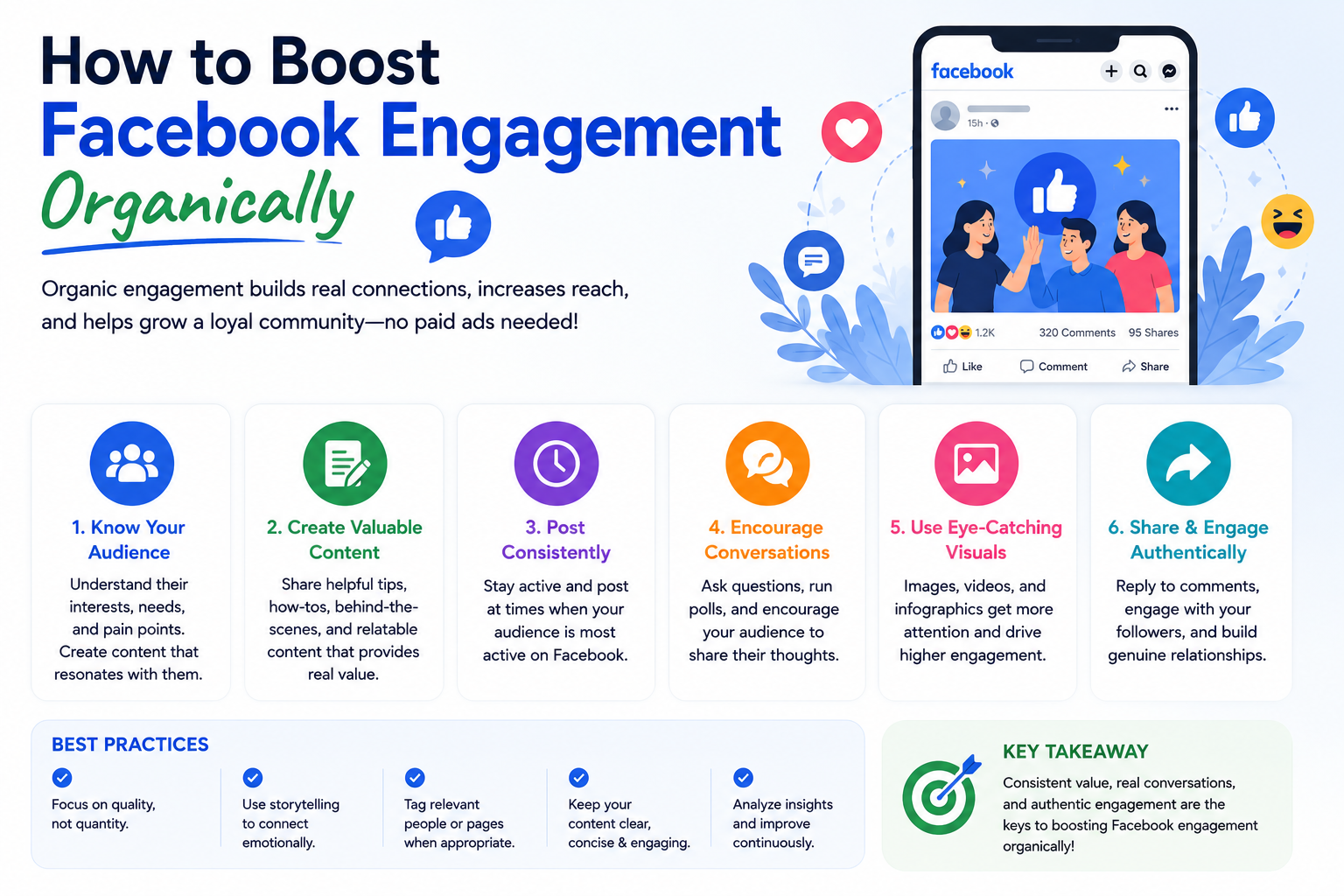
Facebook remains one of the most powerful social media platforms for businesses looking to connect with customers, build brand awareness, and drive meaningful interactions. Despite the rise of newer platforms, Facebook continues to host billions of active users, making it a valuable channel for startups, SMEs, enterprises, and growing brands.
However, many businesses face a common challenge: declining organic reach. As Facebook’s algorithm evolves, simply posting content is no longer enough to attract attention and engagement. Companies that consistently generate likes, comments, shares, and meaningful conversations understand that organic engagement requires strategy, consistency, and audience-focused content.
The good news is that businesses do not always need large advertising budgets to succeed on Facebook. By understanding how people interact with content and what Facebook prioritizes in its algorithm, organizations can significantly improve their engagement rates organically.
In this guide, we’ll explore practical and proven methods to boost Facebook engagement organically while building stronger relationships with your audience and increasing long-term brand visibility.
Why Facebook Engagement Matters More Than Ever
Many organizations focus heavily on follower counts, but engagement is often a far more important metric. A page with 5,000 highly engaged followers can generate better business outcomes than a page with 100,000 inactive followers.
Facebook’s algorithm is designed to show users content they are most likely to interact with. When people engage with your posts through comments, reactions, shares, and saves, Facebook interprets this as valuable content and distributes it to a larger audience.
Higher engagement often leads to:
For startups and growing businesses, strong engagement can become a competitive advantage without requiring substantial advertising investment.
Understand How the Facebook Algorithm Works
Before attempting to increase engagement, it’s important to understand what Facebook prioritizes.
Facebook’s algorithm focuses heavily on meaningful interactions. Content that sparks genuine conversations tends to receive more visibility than posts that simply collect passive likes.
For example, if a local software company publishes a post asking business owners about their biggest digital transformation challenges, the discussion generated may receive greater reach than a simple promotional advertisement.
Facebook generally favors content that:
- Encourages conversations
- Receives comments quickly after publishing
- Generates shares
- Keeps users engaged for longer periods
- Provides value or entertainment
Businesses that create content aligned with these principles are more likely to achieve sustainable organic growth.
Create Content That Solves Real Problems
One of the biggest mistakes brands make is focusing exclusively on themselves.
Customers are rarely interested in constant sales messages. Instead, they engage with content that helps them solve problems, learn something new, or make better decisions.
A technology company, for instance, might create educational posts explaining cybersecurity risks, cloud migration strategies, or productivity tools. Such content positions the brand as a trusted expert while encouraging users to participate in discussions.
The most engaging content often addresses:
- Industry challenges
- Frequently asked customer questions
- Emerging market trends
- Business growth opportunities
- Practical tips and insights
When your audience consistently finds value in your posts, engagement naturally increases over time.
Focus on High-Quality Visual Content
Visual content continues to dominate Facebook engagement metrics.
Research across social media platforms consistently shows that images, videos, and visual storytelling attract significantly more interactions than text-only posts. Users scroll quickly through their feeds, and compelling visuals help capture attention instantly.
Rather than publishing generic stock photos, businesses should invest in authentic visual content that reflects their brand identity.
Examples include:
- Behind-the-scenes company moments
- Team achievements
- Product demonstrations
- Customer success stories
- Industry event highlights
Video content is particularly effective because Facebook often prioritizes it within user feeds. Short educational videos, expert insights, and customer testimonials can drive meaningful engagement while strengthening credibility.
Encourage Conversations Instead of Broadcasting Messages
Many brands treat Facebook as a one-way communication channel. Successful businesses treat it as a conversation platform.
Instead of posting announcements and waiting for responses, actively encourage discussions.
For example, a SaaS company could ask:
“What is the biggest operational challenge your business is facing in 2026?”
Questions like these invite participation and allow businesses to better understand their audience.
The key is authenticity. People are more likely to engage when they feel their opinions matter and when brands genuinely participate in conversations.
Responding to comments promptly can further increase visibility because each interaction signals relevance to Facebook’s algorithm.
Leverage Storytelling to Build Emotional Connections
Stories create stronger emotional connections than promotional messages.
People naturally relate to experiences, challenges, and successes. Businesses that incorporate storytelling into their Facebook strategy often see higher engagement levels because stories feel personal and relatable.
A startup founder sharing lessons learned during company growth can generate more engagement than a generic marketing message.
Similarly, showcasing customer success stories allows audiences to see real-world outcomes rather than marketing claims.
Storytelling helps humanize brands and encourages users to react, comment, and share content with their own networks.
Post Consistently Without Sacrificing Quality
Consistency plays a critical role in Facebook success.
Many businesses either post excessively or disappear for weeks at a time. Both approaches can limit engagement.
A sustainable publishing schedule helps audiences know when to expect new content while maintaining visibility within the algorithm.
Rather than posting multiple times daily, focus on delivering valuable content consistently.
Quality should always take priority over quantity. A single insightful post can outperform several low-value updates.
Organizations should develop a content calendar that aligns with audience interests, industry events, and business objectives.
Use Facebook Stories to Increase Visibility
Facebook Stories provide another opportunity to engage audiences organically.
Stories appear prominently at the top of the platform, making them highly visible to users. They also create a sense of urgency because content disappears after 24 hours.
Businesses can use Stories to share:
Because Stories feel less formal than feed posts, they often encourage spontaneous engagement and interaction.
Build and Nurture an Active Community
Facebook engagement is not solely about content creation. Community building is equally important.
The most successful brands foster a sense of belonging among their audiences. They create environments where users feel comfortable sharing opinions, asking questions, and participating in discussions.
This can be achieved through active comment moderation, prompt responses, and regular interaction with followers.
Some organizations also establish Facebook Groups around specific topics or industries. These groups often generate deeper engagement than business pages because conversations occur more naturally.
A thriving community creates long-term engagement that extends beyond individual posts.
Optimize Posting Times Based on Audience Behavior
Even outstanding content can underperform if published when audiences are inactive.
Businesses should analyze Facebook Insights to identify when followers are most active. Posting during peak engagement periods increases the likelihood of immediate interactions, which can boost overall reach.
Optimal posting times vary by industry, location, and audience demographics.
For example, B2B companies may experience stronger engagement during weekday business hours, while consumer brands might perform better during evenings and weekends.
Data-driven scheduling helps maximize visibility without requiring additional resources.
Encourage User-Generated Content
User-generated content is one of the most effective ways to increase organic engagement.
When customers share experiences with your products or services, they create authentic content that audiences trust.
For instance, a software company could encourage customers to share productivity success stories after implementing a new solution. These testimonials not only boost engagement but also strengthen brand credibility.
User-generated content often generates higher interaction rates because it feels more genuine than traditional marketing materials.
Additionally, featuring customer content demonstrates appreciation and strengthens relationships with existing clients.
Analyze Performance and Continuously Improve
Improving Facebook engagement is an ongoing process rather than a one-time effort.
Businesses should regularly evaluate performance metrics to understand which content resonates most with audiences.
Important engagement metrics include:
- Comments
- Shares
- Reactions
- Reach
- Click-through rates
Patterns quickly emerge when performance is tracked consistently. Some topics may generate significantly more engagement than others, allowing businesses to refine their content strategies.
Continuous optimization ensures long-term growth and helps organizations adapt to changing audience preferences.
Common Mistakes That Hurt Organic Facebook Engagement
Many organizations unknowingly limit engagement through avoidable mistakes.
Overly promotional content remains one of the biggest issues. When every post focuses on selling, audiences lose interest quickly.
Another common problem is ignoring audience interactions. If followers take the time to comment but receive no response, future engagement may decline.
Inconsistent posting schedules can also reduce visibility and weaken audience relationships.
Finally, businesses often prioritize quantity over quality, publishing frequent low-value content rather than fewer high-impact posts.
Avoiding these mistakes can significantly improve engagement performance over time.
The Future of Organic Facebook Engagement
As social media continues to evolve, authenticity will become increasingly important.
Consumers are becoming more selective about the content they engage with. Generic promotional messages are losing effectiveness, while educational, interactive, and community-focused content continues to gain traction.
Businesses that prioritize meaningful conversations, customer value, and genuine relationship building will be better positioned for long-term success.
Artificial intelligence, personalization, and video content are also expected to play larger roles in shaping engagement strategies in the coming years.
Organizations that adapt early can gain a significant competitive advantage.
Conclusion
Boosting Facebook engagement organically is not about gaming the algorithm or publishing endless content. It is about creating value, building trust, and fostering meaningful interactions with your audience.
Businesses that focus on solving customer problems, encouraging conversations, leveraging storytelling, and consistently delivering quality content can achieve impressive engagement levels without relying heavily on paid advertising.
Whether you’re a startup building brand awareness, an SME seeking stronger customer relationships, or an enterprise expanding digital presence, organic Facebook engagement remains one of the most effective ways to strengthen your online community and drive sustainable growth.
The brands that succeed are those that treat Facebook as a platform for connection rather than promotion. When engagement becomes the priority, business results naturally follow.
Ready to Strengthen Your Digital Presence?
Organic Facebook growth requires more than occasional posting. It demands a strategic approach, audience insights, compelling content, and ongoing optimization.
If your business is looking to improve social media performance, accelerate digital transformation, and build a stronger online presence, partnering with an experienced digital marketing and technology team can help you achieve measurable results faster.
Choose a technology partner that understands modern customer behavior, data-driven marketing, and scalable growth strategies to turn social engagement into long-term business success.
Frequently Asked Questions (FAQs)
How can I increase Facebook engagement without spending money?
You can increase Facebook engagement organically by publishing valuable content, encouraging conversations, responding to comments, using videos and Stories, and maintaining a consistent posting schedule.
How often should businesses post on Facebook?
Most businesses benefit from posting consistently several times per week. The ideal frequency depends on audience behavior, industry trends, and content quality.
Does Facebook still support organic reach?
Yes. While organic reach has become more competitive, Facebook continues to reward content that generates meaningful interactions and valuable conversations.
What type of Facebook content gets the most engagement?
Videos, customer stories, educational content, behind-the-scenes updates, and interactive posts generally receive higher engagement than purely promotional content.
Why is engagement more important than follower count?
Engagement indicates active audience participation and interest. A smaller but engaged audience often delivers better business results than a large but inactive follower base.