


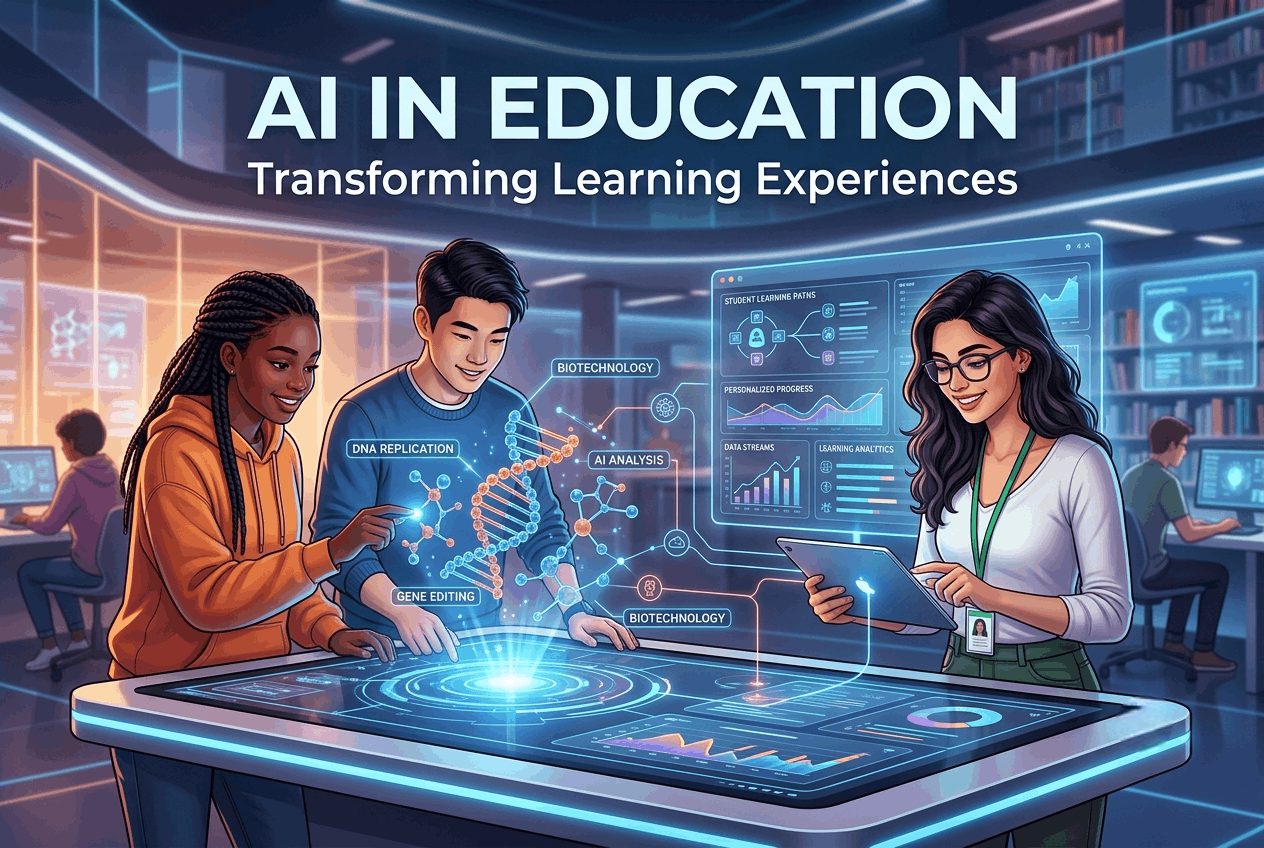
Education has always evolved alongside technology. From printed textbooks to digital classrooms, every innovation has changed how students learn and how educators teach. Today, Artificial Intelligence (AI) is becoming one of the most influential technologies in education, helping schools, universities, training organizations, and businesses create smarter and more effective learning environments. AI is no longer just a concept for the future—it is already shaping classrooms around the world.
The growing demand for personalized learning, remote education, and skill development has encouraged educational institutions to adopt AI-powered solutions. These technologies help teachers understand student performance, automate repetitive tasks, and deliver customized learning experiences based on individual needs. As a result, students receive better support while educators gain valuable tools to improve teaching quality.
For businesses operating in the education sector, AI presents significant opportunities to improve services, reduce operational costs, and increase learner engagement. Whether it is an online learning platform, corporate training program, or educational institution, AI is transforming the way knowledge is delivered and experienced. Understanding these changes is becoming essential for organizations that want to remain competitive in today’s digital learning landscape.
Understanding AI in Modern Education
Artificial Intelligence in education refers to computer systems that can perform tasks requiring human intelligence, such as analyzing data, recognizing learning patterns, making recommendations, and providing personalized support. Unlike traditional educational software, AI continuously learns from user interactions and becomes more effective over time.
Modern AI solutions can evaluate a student’s strengths and weaknesses by analyzing performance data collected during lessons, assignments, quizzes, and classroom activities. Based on this information, the system recommends personalized learning paths, identifies areas needing improvement, and provides additional resources that match each learner’s pace.
Educational institutions are increasingly using AI to improve both classroom teaching and administrative operations. From automated attendance systems to intelligent grading tools, AI reduces manual work while allowing educators to spend more time focusing on student development rather than routine administrative tasks.
Businesses developing educational products also benefit from AI by creating interactive platforms that adapt to user behavior. These intelligent systems increase learner satisfaction, improve course completion rates, and provide valuable insights that help organizations continuously improve their educational services.
Why AI Is Becoming Essential in Education
The education sector is facing growing challenges, including larger classrooms, diverse learning needs, teacher shortages, and increasing expectations for personalized education. AI helps address many of these issues by offering scalable solutions that support both students and educators.
Traditional teaching methods often follow a single approach for all learners, despite the fact that every student has different learning abilities, interests, and speeds. AI allows educational content to adapt automatically, ensuring that learners receive lessons suitable for their individual progress rather than following a fixed curriculum.
The popularity of online learning has also accelerated AI adoption. Digital classrooms generate large amounts of learning data that AI can analyze to identify engagement levels, predict learning outcomes, and recommend improvements that enhance educational effectiveness.
For organizations providing corporate training, AI helps employees learn new skills more efficiently. Personalized training programs improve knowledge retention, reduce training costs, and help businesses develop a more skilled workforce capable of adapting to changing industry demands.
Personalized Learning: The Biggest Advantage of AI
One of the most significant benefits of AI in education is personalized learning. Every learner has unique strengths, weaknesses, interests, and preferred learning methods. AI makes it possible to customize educational experiences according to these individual characteristics.
AI systems monitor how students interact with educational content. If a learner struggles with a particular concept, the platform automatically recommends additional lessons, practice exercises, videos, or quizzes. Students who master topics quickly receive more advanced content, keeping them challenged and engaged.
This adaptive learning approach improves motivation because students no longer feel overwhelmed or bored. Instead, they progress at a comfortable pace while receiving continuous support based on their specific learning journey.
Educational institutions also benefit from improved learning outcomes. Personalized instruction reduces dropout rates, increases student confidence, and helps learners achieve better academic performance while making education more inclusive for individuals with different abilities.
AI-Powered Intelligent Tutoring Systems
AI-powered tutoring systems are changing how students receive academic support outside traditional classrooms. These virtual tutors provide instant assistance whenever learners need help, making education available around the clock.
Unlike conventional tutoring, AI tutors can answer frequently asked questions, explain difficult concepts using different approaches, generate practice exercises, and provide immediate feedback. Students can continue learning independently without waiting for teacher availability.
These systems are particularly valuable for online education, where students may study across different time zones or follow flexible schedules. AI tutors ensure continuous learning support while reducing pressure on teaching staff.
Businesses developing educational technology are investing heavily in intelligent tutoring because these solutions improve learner engagement and satisfaction. As AI models become more advanced, virtual tutors continue delivering increasingly natural and effective educational experiences.
Improving Classroom Engagement with AI
Student engagement plays a major role in educational success. AI helps create interactive learning environments that encourage active participation instead of passive learning.
Many AI-powered learning platforms include gamification features, interactive quizzes, personalized challenges, and adaptive exercises that maintain learner interest throughout lessons. These elements make education more enjoyable while encouraging consistent participation.
Teachers can also monitor student engagement through AI analytics. If the system detects declining participation or poor performance, educators receive alerts that help them intervene before students fall behind academically.
Interactive learning experiences are particularly important for younger students who respond well to visual content and real-time feedback. AI supports these teaching methods while helping educators maintain meaningful classroom interactions.
Automating Administrative Tasks
Educational institutions spend considerable time managing administrative responsibilities such as attendance tracking, grading assignments, scheduling classes, and maintaining student records. AI significantly reduces this workload through automation.
Automated grading systems can evaluate objective assessments within seconds, allowing teachers to focus on providing meaningful feedback rather than spending hours marking papers. AI also assists in organizing schedules, managing admissions, and responding to routine administrative inquiries.
Schools and universities benefit from greater operational efficiency because repetitive tasks require less manual effort. Administrative staff can dedicate more time to strategic planning, student services, and institutional development.
Automation also improves accuracy by reducing human errors in record management, reporting, and scheduling. As educational institutions grow, AI helps maintain efficiency without proportionally increasing administrative costs.
Supporting Teachers Instead of Replacing Them
One common misconception is that AI will replace teachers. In reality, AI is designed to support educators rather than substitute their expertise, creativity, and emotional intelligence.
Teachers remain responsible for inspiring students, encouraging critical thinking, managing classroom discussions, and providing emotional support. AI simply handles repetitive tasks while offering valuable insights that help teachers make informed instructional decisions.
By analyzing classroom performance data, AI helps educators identify struggling students earlier and develop targeted intervention strategies. Teachers can also access recommendations for lesson improvements based on learning analytics.
This partnership between teachers and AI creates a more effective educational environment where technology enhances human capabilities instead of replacing them.
AI in Online Learning Platforms
Online education has expanded rapidly, creating demand for smarter learning platforms capable of supporting thousands of learners simultaneously. AI plays a central role in delivering personalized online education.
Learning platforms use AI to recommend courses, customize lesson sequences, evaluate learner progress, and provide intelligent feedback. Students receive a more engaging experience that feels tailored to their individual goals.
AI also improves accessibility by offering automated subtitles, speech recognition, language translation, and voice-based interactions. These features help learners from different backgrounds access educational content more easily.
Businesses offering e-learning services gain valuable competitive advantages through AI-powered personalization. Improved learner satisfaction often results in higher completion rates, stronger customer retention, and better educational outcomes.
Key Factors for Successful AI Implementation in Education
Organizations planning to adopt AI should consider several important factors to ensure successful implementation:
- Clearly define educational goals before selecting AI solutions.
- Maintain high-quality and secure student data.
- Train teachers and staff to use AI tools effectively.
- Balance automation with human interaction.
- Continuously evaluate AI performance and learner outcomes.
Careful planning ensures that AI delivers meaningful improvements rather than becoming another underused technology investment. Institutions that combine strong leadership with effective implementation strategies often achieve the best long-term results.
Common Mistakes to Avoid When Adopting AI
Although AI offers many advantages, organizations sometimes make avoidable mistakes during implementation. Understanding these challenges helps maximize the value of AI investments.
Many institutions focus too heavily on technology while overlooking teacher training. Without proper guidance, educators may struggle to integrate AI effectively into daily teaching activities, limiting its potential benefits.
Another common mistake involves collecting excessive student data without establishing strong privacy and security measures. Educational institutions must prioritize responsible data management to maintain trust among students and parents.
Some organizations also expect immediate improvements after deploying AI systems. Successful adoption requires continuous evaluation, refinement, and collaboration between educators, administrators, and technology providers.
Finally, relying entirely on automation can reduce valuable human interaction. Education remains fundamentally human-centered, making it important to combine AI capabilities with meaningful teacher involvement.
The Future of AI in Education
The future of AI in education looks highly promising as technology continues advancing. Future AI systems will become even better at understanding learner behavior, predicting educational outcomes, and delivering highly personalized learning experiences.
Virtual reality, augmented reality, and AI are expected to work together to create immersive classrooms where students can explore historical events, conduct virtual science experiments, or practice professional skills within realistic digital environments.
Generative AI will also support content creation by helping educators design lesson plans, quizzes, simulations, and interactive educational materials more efficiently. This reduces preparation time while increasing instructional creativity.
Businesses serving the education sector will continue investing in intelligent learning platforms that provide measurable educational improvements. As AI becomes more accessible and affordable, organizations of all sizes will be able to adopt advanced learning technologies.
Business Opportunities Created by AI in Education
AI is not only transforming education but also creating significant business opportunities across the learning ecosystem. Educational technology companies are developing innovative platforms that address growing demand for flexible, personalized, and scalable learning solutions.
Corporate organizations increasingly invest in AI-powered employee training to improve workforce productivity and close skill gaps. Personalized learning paths help employees develop relevant competencies more efficiently while reducing training expenses.
Startups are also introducing AI-driven assessment tools, language learning applications, intelligent tutoring services, and adaptive educational content that serve schools, universities, and individual learners worldwide.
For decision-makers, investing in AI-powered education solutions represents more than technological innovation. It creates opportunities to improve customer satisfaction, strengthen competitive positioning, and support lifelong learning in an increasingly knowledge-driven economy.
Conclusion
Artificial Intelligence is reshaping education by making learning more personalized, accessible, efficient, and engaging. From intelligent tutoring systems and adaptive learning platforms to automated administration and data-driven teaching, AI enables educational institutions and businesses to deliver higher-quality learning experiences while improving operational efficiency. Rather than replacing educators, AI empowers them with better tools that enhance student success and organizational performance.
As education continues to evolve, organizations that embrace AI responsibly will be better positioned to meet changing learner expectations and future workforce demands. By combining advanced technology with human expertise, businesses and educational institutions can build learning environments that are more inclusive, effective, and prepared for the future. AI in education is not simply a technological trend—it is becoming a fundamental driver of innovation and long-term educational excellence.